
Coffee vs. Celsius: Which Is the Better Energy Boost?
Coffee or Celsius? Both are popular, but which is actually healthier for you?
(Plus, my hot take on energy drinks 🤫)
I can count on one hand the number of energy drinks I have had in my life— I have just never been a fan. But coffee, on the other hand? Oh, your girl loves her coffee. But lately, I’ve started thinking I may be in the minority in caffeine preference?
Over the last few years, though, I have seen cans of Celsius energy drinks everywhere. Celsius has become one of the most recognizable names in the world of energy drinks, often marketed as a source of “clean energy” that supports an active lifestyle.
At the same time, coffee has remained one of the most extensively researched beverages in nutrition science. Millions of people start their day with a typical cup of black coffee or latte (hii it’s me 🙋🏻♀️ )
But when it comes to Celsius vs coffee, is one actually healthier? My own biases aside, I wanted to review the available information to provide a nuanced answer.
Because the answer isn't quite as simple as declaring a winner. Both beverages contain caffeine, both can improve alertness and physical performance, and both have potential drawbacks depending on your health history and how much you consume.
So, here is a balanced look at the ingredients, the research, and who each drink may be best suited for.
Let’s Talk Caffeine: How Much Caffeine Is in Each?
One of the biggest differences comes down to the amount of caffeine.
A typical cup of coffee contains anywhere from about 80 to 120 milligrams of caffeine, although stronger brews or larger serving sizes can easily exceed that. A cold brew coffee, for example, often contains significantly more caffeine than standard drip coffee.
A standard can of Celsius contains 200 mg of caffeine, while Celsius Heat contains approximately 300 mg of caffeine, placing it among beverages with particularly high caffeine content.
For comparison:
Typical brewed coffee: 80–120 mg
Espresso shot: ~63 mg
Celsius: 200 mg
Celsius Heat: 300 mg
Red Bull (8.4 oz): about 80 mg
Many Alani Nu drinks: 200 mg
So if you're wondering which contains more caffeine, the answer depends on your coffee order. A large specialty coffee may rival Celsius, while a standard mug usually contains considerably less.
The FDA suggests that up to 400 milligrams of caffeine per day is generally considered safe for most healthy adults, though individual tolerance varies considerably.
How Many Servings Are You Having?
When we talk about caffeine intake, it is important to talk about total amounts. The FDA gives daily recommendations, not per serving. This means that oftentimes, one single drink can get you to that daily recommended allotment.
Want a second cup of coffee? A second energy drink? You may significantly exceed that daily recommended limit…
What Are the Ingredients?
I’m a big advocate for reading nutrition labels and ingredient lists. Here is a brief overview of the ingredients of coffee vs Celsius.
Coffee
One of coffee's biggest strengths is its simplicity.
Black coffee contains essentially one ingredient: roasted Arabica coffee or Robusta coffee beans, plus water.
Coffee naturally provides:
Antioxidants called polyphenols
Small amounts of minerals
Naturally occurring caffeine
That's it.
Many of coffee's health benefits are thought to come from these naturally occurring plant compounds rather than caffeine alone.
But that’s the thing— most people do not drink black coffee. Whether you are drinking a latte, a cup of coffee with cream, a frappuccino, or an americano will drastically affect the ingredients and subsequent health effects.
Related Reads:
Celsius
Unlike coffee, Celsius drinks include a much longer ingredient list.
While formulations vary between Celsius varieties and flavors, many products contain:
Green tea extract
Green tea leaf extract
Guarana seed extract
Guarana extract
Ginger extract
Vitamin C
Several B vitamins
Vitamin B
Pantothenic acid
Citric acid
Calcium carbonate
Sucralose (an artificial sweetener)
Natural flavors — again, this is a general “catch-all” for many different possible ingredients. I found this article really helpful to learn what exactly “natural flavors” means, and what it does not
Many Celsius products also include what the company refers to as a proprietary blend of botanical ingredients. Because the ingredients are grouped together, consumers can't always determine exactly how much of each individual extract is included.
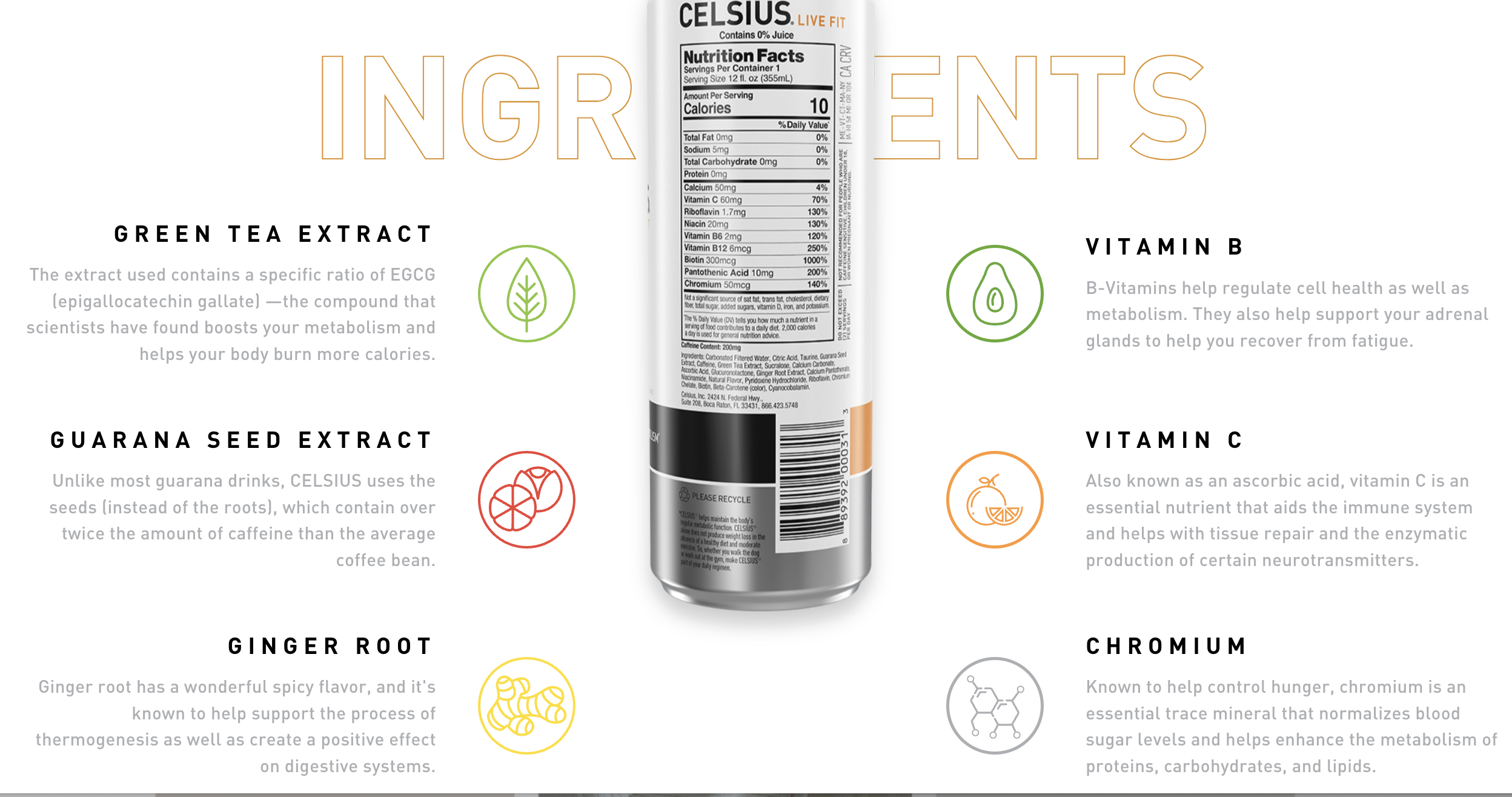
via celsius.com — as with most highly processed foods and drinks, the more “natural ingredients” are highlighted in marketing. There is nothing inherently wrong with that, but I advocate that consumers look at the full ingredient list to get a more comprehensive idea of what makes up a product.
Do the Added Ingredients Make Celsius Healthier?
This is probably the biggest question consumers ask.
The short answer? Not necessarily.
Ingredients like green tea extract, ginger extract, and guarana extract do have research supporting various potential health benefits.
For example:
Green tea contains catechins that may support metabolic health.
Ginger has anti-inflammatory properties.
Guarana naturally contains caffeine.
However, the amounts used in Celsius energy drinks may differ substantially from the doses used in clinical research. Because the exact amounts aren't always disclosed due to the proprietary blend, it's difficult to know how much these ingredients actually contribute.
In other words, the main reason most people feel more energized after drinking Celsius is probably still the caffeine.
Can Celsius Increase Your Metabolic Rate?
One of the most common Celsius claims is supporting calorie burning. Which then causes people to view it as something with potential to support weight loss…
Some small industry-funded studies have found modest increases in metabolic rate after consuming Celsius compared to placebos.
However, these effects appear to be largely explained by caffeine itself, along with ingredients like green tea and guarana.
Even if metabolism temporarily increases, the effect is relatively small and shouldn't be viewed as a meaningful weight loss strategy on its own.
No beverage replaces a nutritious eating pattern, regular physical activity, adequate sleep, and a balanced diet.
Coffee's Health Benefits
Coffee has been studied extensively for decades.
Research has linked moderate coffee intake with:
Lower risk of type 2 diabetes
Lower risk of Parkinson's disease
Lower risk of liver disease
Reduced risk of some cardiovascular conditions
Improved cognitive performance
Better endurance during exercise
Coffee also contains hundreds of naturally occurring plant compounds that act as antioxidants.
For many people, coffee is actually one of the largest sources of antioxidants in their daily diet.
Does Celsius Offer Any Benefits?
That doesn't mean Celsius has no advantages.
Many people enjoy it because of it’s convenience and grab-and-go packaging. Some people appreciate getting consistent caffeine content, or having a sweet beverage and sugar-free formulas (although artificial sweeteners are the cause). Others like it for the noticeable boost of energy before and during workouts.
The caffeine in Celsius can improve:
Alertness and focus
Exercise performance, including endurance and reaction time
These benefits are well established in exercise nutrition research and apply whether the caffeine comes from coffee or an energy drink.
Potential Downsides of Coffee
Although coffee has many positives, it isn't perfect.
Possible drawbacks include:
Acid reflux
Stomach irritation
Anxiety in sensitive individuals, sleep disruption, or withdrawal symptoms (which are true potential side effects for any caffeinated beverages)
Some people also experience jitters, especially if they consume several cups of coffee throughout the day.
Potential Downsides of Celsius
Because Celsius contains more caffeine than many coffees, it may produce stronger effects.
Potential negative side effects include:
Increased heart rate
Temporary increases in high blood pressure
Anxiety
Insomnia
Digestive upset
Feeling shaky
People with caffeine sensitivity may notice these effects even after a single serving.
Those with certain health conditions, including uncontrolled hypertension, cardiac rhythm disorders, or anxiety disorders, should speak with their healthcare provider before regularly consuming highly caffeinated beverages.
What About Artificial Sweeteners?
One of the biggest differences between coffee and Celsius is sweetness.
Plain black coffee contains no sweeteners.
Most Celsius energy drinks use sucralose, an artificial sweetener, to provide sweetness without sugar.
Current research suggests approved artificial sweeteners are generally considered safe within established intake limits. However, some people prefer to minimize them due to digestive symptoms or simply personal preference.
If your goal is eating primarily real food source ingredients with minimal processing (which is my personal choice most of the time), coffee has a far simpler ingredient list (depending on how you sweeten it, if at all).
Related Reads:
Which Provides Better Energy?
This often comes down to how quickly the caffeine is absorbed and what you're consuming alongside it.
Many people describe coffee as providing a smoother energy curve, especially when paired with breakfast or another meal.
Others appreciate Celsius because its higher caffeine dose creates a faster quick energy boost, particularly before exercise. Some people also report less of a crash after Celsius, while others experience the opposite.
Individual genetics, caffeine metabolism, meal timing, hydration, and total caffeine intake throughout the day all influence how you feel. So, in this category, it’ll be a personal choice!
Who Should Avoid Both?
Neither beverage is appropriate for everyone.
Extra caution is recommended for:
Pregnant women, who should generally limit caffeine to 200 mg daily or less unless advised otherwise by their healthcare provider
Children and adolescents
Individuals with uncontrolled cardiovascular disease
Those with significant caffeine sensitivity
Anyone experiencing persistent health issues related to caffeine
Which Is the Better Option: Coffee or Celsius?
If your primary goal is maximizing nutrition while keeping ingredients simple, coffee probably comes out ahead. It contains a short ingredient list (if you are choosing a simple drink), naturally occurring antioxidants, and decades of research supporting its role in overall health when consumed in moderation.
If you're looking for a portable fitness drink, enjoy flavored beverages, or want a consistent 200 mg caffeine serving before a workout, Celsius may fit your routine.
Neither drink is inherently "good" or "bad."
The best option depends on your overall eating pattern, caffeine tolerance, medical history, and nutrition goals.
My Take
As someone who generally prioritizes whole foods and minimally processed ingredients, I always reach for coffee first. I appreciate that it's made from roasted coffee beans, contains naturally occurring antioxidants, and has a remarkably simple ingredient list.
That said, I don't think there's anything inherently wrong with enjoying a Celsius from time to time if it fits your lifestyle and you tolerate caffeine well. The important factor isn't whether one beverage is perfect—it's how it fits into your overall nutrition, sleep, stress management, and movement habits.
Whether you choose coffee or Celsius, neither should replace good sleep, nourishing meals, hydration, or regular exercise. Those habits will always have a far greater impact on your overall health than whichever caffeinated drink you reach for.
What are your fave caffeine sources?
latest on the blog…













Stop waiting for January to start working towards your health goals.