
Best Non-Toxic Deodorant Brands: Clean Options That Actually Work
I think I’ve tried nearly every “clean” deodorant out there… some aren’t as non-toxic as their marketing claims, some aren’t good for sensitive skin, and some just stink (literally).
Here are my faves!
Finding a natural deodorant that actually works can be surprisingly difficult.
Over the years, I’ve tried my fair share of natural deodorant options—some worked surprisingly well, while others left me wondering whether switching away from conventional deodorants was worth it at all.
The good news is that clean deodorants have come a long way in recent years. You can now find aluminum-free deodorants made with simple, thoughtfully selected ingredients that help manage body odor without relying on synthetic fragrances or an unnecessarily complicated ingredient list.
In this guide, I’m sharing some of the best non-toxic deodorant brands I’ve found, including options for sensitive skin, baking soda-free formulas, and my favorite option specifically for men.
TLDR: Kaelyn’s Quick Picks
My top picks are:
Primally Pure for the best overall natural deodorant (KAELYN10 saves you 10% at checkout ✨)
Toups & Co. for sensitive skin
Just Ingredients for a magnesium-based option
HygieneLab as my top pick for men.
Table of Contents:
What makes a deodorant non-toxic?
Deodorant vs antiperspirant: what's the difference?
What about aluminum and breast cancer?
Ingredients I look for in natural deodorant
Best Non-toxic deodorant brands
Honorable Mentions
FAQ's
What Makes a Deodorant “Non-Toxic”?
First, there isn't an official regulatory definition of a “non-toxic deodorant.” I use the term as shorthand for products made with relatively simple, transparent ingredients while avoiding certain ingredients I personally prefer to limit in my everyday personal care routine.
When comparing natural deodorant brands, I generally look for:
An aluminum-free formula (i’ll get into why here in a minute)
No artificial or undisclosed fragrance
Transparent ingredient labels
No unnecessary phthalates or parabens
Ingredients that help address odor-causing bacteria
Options for sensitive skin
A formula that is actually practical for everyday life
I also prefer brands that are transparent about their fragrance ingredients rather than simply listing “fragrance” on the ingredient list.
That doesn't mean every conventional deodorant is inherently harmful, or that every product marketed as “natural” automatically contains safe ingredients. This is why I think taking a closer look at the actual formula is more useful than relying solely on marketing claims.
Related Reads:
Deodorant vs. Antiperspirant: What's the Difference?
This distinction is important.
Deodorant primarily helps control body odor. Antiperspirant reduces how much you sweat.
Sweating is a natural process your body uses in regulating body temperature. Sweat itself isn't necessarily what smells. Body odor develops largely when bacteria on the skin break down components of your sweat.
Conventional antiperspirant products typically use aluminum compounds as their active ingredient. Ingredients such as aluminum chlorohydrate and other aluminum salts temporarily block sweat ducts, reducing the amount of perspiration that reaches the surface of your skin.
Natural deodorants take a different approach. Rather than preventing perspiration, ingredients such as magnesium hydroxide, sodium bicarbonate (baking soda), coconut oil, or arrowroot powder can help manage odor and moisture.
This also means you should expect to still sweat while using an aluminum-free deodorant. That isn't necessarily a sign that your deodorant isn't working.
What About Aluminum and Breast Cancer?
This is one area where I think clean-living conversations can become unnecessarily fear-based.
You may have heard claims that aluminum antiperspirant causes breast cancer because it is applied close to breast tissue or that aluminum compounds act as endocrine disruptors.
At this point, however, research has not established that using aluminum-containing antiperspirants causes breast cancer. The National Cancer Institute states that there is currently no scientific evidence linking underarm antiperspirants or deodorants with the development of breast cancer.
That doesn't mean you have to use an aluminum antiperspirant.
I personally prefer aluminum-free deodorants because I don't necessarily need to stop my body from sweating, and there are plenty of effective natural alternatives available. But I think there is an important difference between making that personal choice and claiming that conventional antiperspirant has been proven to cause cancer.
Ingredients I Look for in Natural Deodorant
Natural deodorants can use several different ingredients to control odor and absorb moisture.
Magnesium hydroxide: One of my favorite alternatives to baking soda, particularly for sensitive skin. It helps create an environment that is less favorable to odor-causing bacteria.
Baking soda: Also listed as sodium bicarbonate, baking soda can be extremely effective at controlling body odor. However, it can cause skin irritation for some people, so a baking soda-free version may be a better choice if your underarms are sensitive.
Organic arrowroot powder or tapioca starch: These starches help absorb some surface moisture without acting like a conventional antiperspirant.
Organic coconut oil: Frequently used as the moisturizing base in natural products and often paired with other odor-fighting ingredients.
Shea butter or tallow: These richer ingredients can make deodorant formulas more nourishing and comfortable on dry or sensitive skin.
Essential oils: Essential oils can provide natural fragrance, but they aren't automatically appropriate for everyone. If you're particularly sensitive to fragrance ingredients, an unscented option may still be the best choice.
Best Non-Toxic Deodorant Brands
Deodorant was one of the first products I ever intentionally swapped out for a healthier option. That said, it took me a loooong while to land on one that actually worked well and didn’t cause irritation. Here are my faves!
1. Primally Pure Deodorant — Best Overall
Best for: Someone looking for an effective, traditional natural deodorant with several scent and formula options.
Primally Pure’s deodorants are some of the most recognizable options in the natural personal care space, and they're still one of my top picks. I've used this product nearly every day for almost 5 years. It's been my top recommendation because of the quality, the company, and it actually works (even during those early postpartum days 🥴😅 IYKYK)
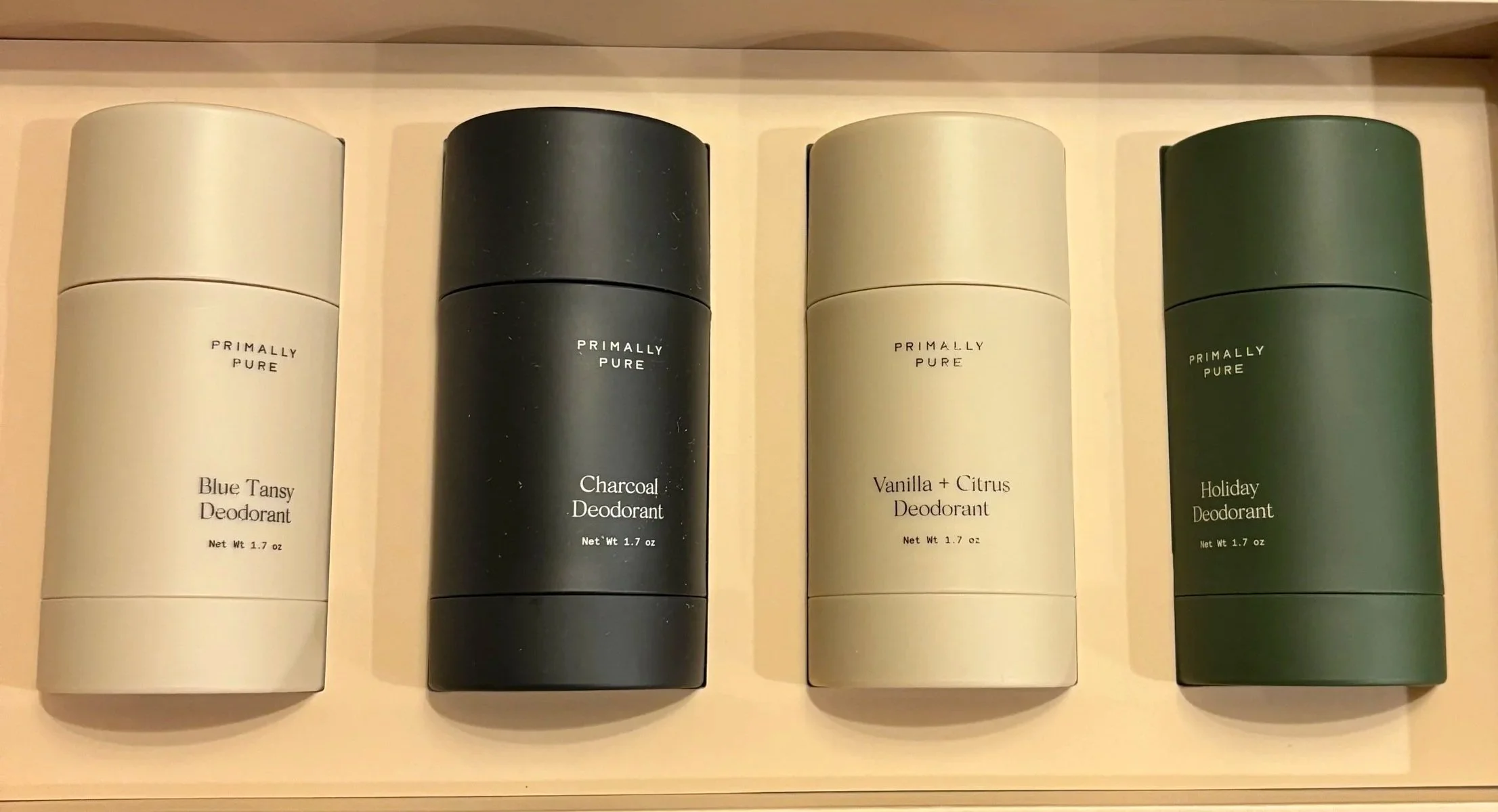
Their original deodorants use ingredients such as organic arrowroot powder, coconut oil, naturally mined baking soda, grass-fed tallow, beeswax, zinc oxide, clay, and essential oils depending on the scent.
What I especially appreciate is that Primally Pure also offers a baking soda-free deodorant specifically for sensitive skin. That formula swaps baking soda and essential oils for ingredients including magnesium hydroxide and magnesium carbonate hydroxide.
That makes Primally Pure a great place to start if you're switching to natural deodorant for the first time because you can choose the formula that makes the most sense for your skin.
Pros:
Simple, recognizable ingredients
Aluminum-free
Original and baking soda-free options
Unscented option available
Multiple lovely scents
Uses organic arrowroot powder
Good option for sensitive skin if you choose the baking soda-free version
Potential downside: Primally Pure is a high-quality brand that takes sourcing seriously. That said, their products are generally more expensive. My favorite way to save money is by purchasing the bundles and using my discount code at checkout (KAELYN10 saves you 10% at checkout ✨)
My pick: The baking soda-free version if you've experienced irritation from natural deodorants in the past.
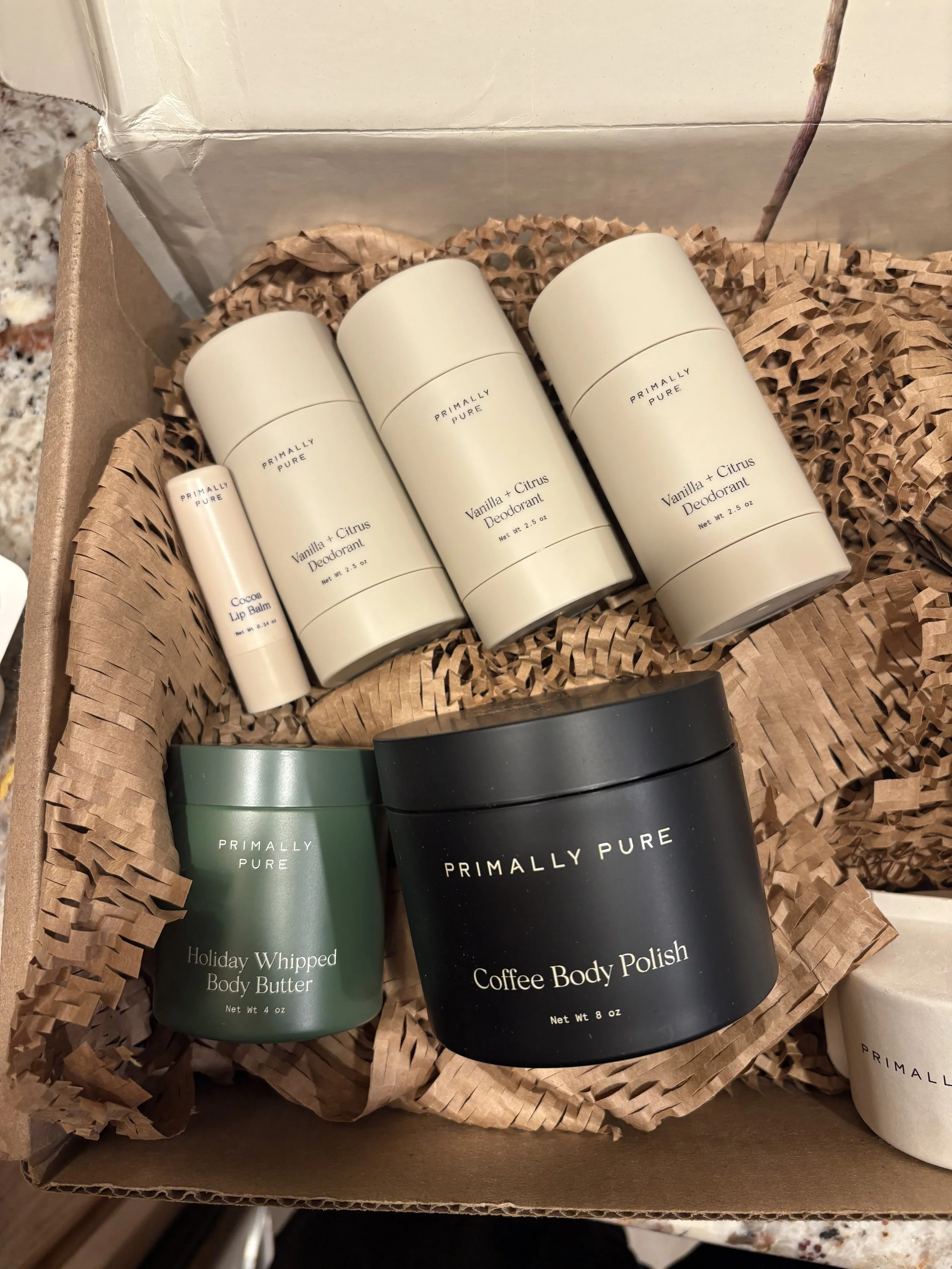
The vanilla + citrus deodorant has been my go-to for nearly 5 years! Every couple of months I bulk buy it so I never run out 😅
2. Toups & Co. Natural Deodorant — Best for Sensitive Skin
Best for: Sensitive skin or anyone who wants a simple baking soda-free formula.
Toups & Co. is my current fave for healthier makeup options, so naturally I had to test their deodorant out too. The company takes a slightly different approach with a tallow-based stick deodorant.
Its formula includes grass-fed tallow, beeswax, coconut oil, fractionated coconut oil, organic arrowroot powder, and magnesium hydroxide. Scented versions contain organic essential oils, while an unscented version is also available.
Importantly, this formula is baking soda-free, making it one of my favorite options for people who have experienced redness, discoloration, itching, or skin irritation with sodium bicarbonate-based deodorants.
I also like that the ingredient list is exceptionally short and easy to understand.
Pros:
Baking soda-free
Magnesium hydroxide for odor control
Grass-fed tallow
Organic arrowroot powder
Unscented version available
Particularly good for sensitive skin
Short ingredient list
Potential downside: The tallow and beeswax mean this isn't an option for someone specifically looking for vegan deodorants.
Best for: Anyone whose skin hasn't tolerated traditional baking soda-based natural deodorants. They also offer an extra-strength option if you need something a big stronger (the extra-strength does include baking soda so just be aware of that!)
3. Just Ingredients Magnesium Deodorant — Best Magnesium Deodorant
Just Ingredients uses magnesium hydroxide as the star of its deodorant formula rather than baking soda.
The brand's deodorant is formulated without aluminum, baking soda, propylene glycol, artificial fragrances, parabens, phthalates, and formaldehyde-releasing preservatives.
Magnesium hydroxide helps manage odor while ingredients such as sweet almond oil, beeswax, and vitamin E contribute to the texture and skin feel.
This is a great choice if you've struggled with baking soda but still want a traditional stick deodorant rather than a deodorant cream.
Pros:
Aluminum-free
Baking soda-free
No artificial fragrances
No propylene glycol
Magnesium-based formula
Traditional stick application or cream deodorant
More affordable than some premium natural deodorant options
Potential downside: The scented versions contain essential oils, so very sensitive users may still prefer an unscented formula.
Best value: This is one of the more affordable options on my list while still checking many of the boxes I look for in a cleaner personal care product.
4. HygieneLab Deodorant — Best Non-Toxic Deodorant for Men
HygieneLab is my top pick specifically for men. My husband started using this a few months ago and really enjoys their products!
One of the biggest challenges with natural men's personal care products is finding something that feels effective enough for workouts, workdays, and normal daily activities without relying on heavy artificial fragrances.
HygieneLab's deodorant is aluminum-free and uses ingredients including propanediol, sodium stearate, glycerin, sodium bicarbonate, Saccharomyces ferment, allantoin, and other odor-control ingredients.
Rather than using synthetic fragrance or undisclosed fragrance blends, its scented deodorants use essential oils, and the brand also makes an unscented version.
Another major standout: HygieneLab's products are EWG Verified, which gives shoppers who use the EWG Skin Deep framework an additional third-party reference point when evaluating ingredients.
Pros:
My top choice for men
Aluminum-free
EWG Verified
No synthetic fragrance
Essential oil-based scents
Unscented option
Traditional stick format
Designed specifically with men's personal care routines in mind
Potential downside: It contains sodium bicarbonate, so people who know they react to baking soda may want to choose another option on this list. That said, my husband has pretty sensitive skin and has never had any irritation.
Best for: Men who have been reluctant to switch to natural deodorant because they don't want to sacrifice performance or a familiar deodorant experience.
A Few Other Natural Deodorant Brands Worth Considering
While the four brands above are my top picks, there are several other popular clean deodorants you may come across.
Ursa Major offers aluminum-free deodorant and is another established brand in the clean personal care space. I’ve tried it and didn’t love it personally. Maybe if they had different scent options, as when I tried it they were pretty limited 🤷🏻♀️
Agent Nateur is a brand that has been pretty hit or miss for me. While some of their products are good, I have yet to try this deodorant because of the price point. If you’ve tried it, I’d love to hear your experience! But I do love the ingredient list and brand objectives!
Meow Meow Tweet is particularly interesting for shoppers prioritizing lower-waste packaging and reducing single-use plastic. The brand has offered deodorant cream and stick options with great ingredient lists.
Pretty Frank is another natural deodorant brand known for offering different formulas, including options designed for varying sensitivities. They also have the cutest packaging and branding!
What About Fragrance in Deodorant?
Fragrance is one of the first things I look at when evaluating personal care products.
The word “fragrance” can represent a mixture of fragrance ingredients rather than one specific compound, which can make it difficult for consumers to know exactly what is included.
For that reason, I generally prefer products that disclose their scent ingredients, use essential oils or clearly identified fragrance components, or offer an unscented version.
This doesn't mean every synthetic fragrance automatically contains harmful chemicals or hormone-disrupting chemicals. But for someone trying to simplify their personal care routine, choosing products with more transparent fragrance labeling is an easy place to start!
Baking Soda vs. Magnesium Deodorant
If you're trying natural deodorant for the first time, this may be one of the most useful distinctions to understand.
Baking soda deodorants tend to be very effective for odor but can be irritating for a lot of people because sodium bicarbonate has a relatively high pH.
If your underarms become red, itchy, bumpy, or uncomfortable, don't assume all natural deodorants won't work for you.
Try a magnesium hydroxide-based formula instead.
For particularly sensitive skin, my first choices would be:
Sometimes finding the best natural deodorants is simply a matter of finding the active odor-control ingredients your skin tolerates best.
Do You Need a “Detox” When Switching to Natural Deodorant?
You've probably heard that switching away from chemical antiperspirants requires a several-week “detox” or transition period.
I would take that language with a grain of salt.
Your body doesn't need to purge “toxins” from your armpits because you've stopped using aluminum antiperspirant. What can happen is that you're suddenly no longer using an ingredient that suppresses sweating.
That difference can be noticeable.
During the first few weeks, you may need to experiment with how much product you apply, reapply after particularly sweaty daily activities, or try a different formula if you're experiencing odor.
Give yourself a little time to figure out what works for your body, but don't feel like you need to suffer through weeks of severe body odor or skin irritation in the name of “detoxing.” I have found that a simple at home armpit mask can help to neutralize odors and get through that transition period ******
How to Choose the Best Natural Deodorant for You
If you're overwhelmed by all the natural alternatives available, here's where I'd start:
For the best overall: Primally Pure
For sensitive skin: Toups & Co.
For a baking soda-free magnesium formula: Just Ingredients
For men: HygieneLab
For very sensitive skin: Look for both a baking soda-free and fragrance-free version!
For reducing plastic: Look at brands such as Meow Meow Tweet that offer lower-waste packaging.
The best non-toxic deodorant isn't necessarily the product with the longest list of “free-from” claims. It's the one with transparent, safe ingredients that works for your skin and is effective enough that you'll actually use it consistently.
Final Thoughts
Switching deodorant is one of those small changes that can feel surprisingly complicated once you start looking closely at ingredient labels.
My approach is to keep it simple.
I don't think you need to fear every conventional deodorant or assume every unfamiliar ingredient is harmful. I also don't think there's anything wrong with preferring aluminum-free deodorants, avoiding artificial fragrances, and choosing personal care products with cleaner, more transparent ingredient lists.
For most people, Primally Pure, Toups & Co., Just Ingredients, and HygieneLab are four great options to consider depending on your skin sensitivity, budget, and personal preferences.
And if you've tried natural deodorant for a long time without success, don't be afraid to experiment with a different approach. A magnesium-based deodorant may work completely differently for you than a baking soda formula.
Ultimately, the best non-toxic deodorants are the ones that combine clean ingredients, transparency, skin compatibility, and—most importantly—odor protection that holds up in everyday life. 👏
FAQ
What is the best non-toxic deodorant?
Primally Pure is my top overall choice because of its simple ingredient lists and variety of formulas, including a baking soda-free option for sensitive skin. Toups & Co., Just Ingredients, and HygieneLab are also among my top picks.
What is the best non-toxic deodorant for sensitive skin?
Look for a deodorant made without baking soda and potentially without fragrance or essential oils. Toups & Co. and Primally Pure's unscented baking soda-free deodorant are two good options.
What is the best natural deodorant for men?
HygieneLab is my top pick for men because its aluminum-free deodorant has a familiar stick application, multiple masculine scent options, an unscented option, transparent ingredients, and EWG Verified formulas.
Does natural deodorant stop you from sweating?
Usually not. Deodorants primarily control odor, while conventional antiperspirants use aluminum salts to temporarily reduce sweating by blocking sweat ducts. You should generally expect some perspiration when using aluminum-free deodorants.
Does aluminum in deodorant cause breast cancer?
Current evidence does not show that aluminum-containing antiperspirants cause breast cancer. According to the National Cancer Institute, there is no scientific evidence linking underarm antiperspirant or deodorant use to the development of breast cancer.
Personally, I avoid aluminum in deodorant because I think sweating is a natural detoxification process for our bodies.
Why does baking soda irritate my armpits?
Baking soda, or sodium bicarbonate, has a relatively high pH and can cause irritation in some people's skin. If you've developed redness or irritation from baking soda deodorants, consider a magnesium hydroxide-based alternative.
Is magnesium hydroxide a good deodorant ingredient?
Magnesium hydroxide is commonly used in natural deodorants as an alternative to baking soda. It can help control odor without blocking the sweat glands and tends to be well suited to people whose skin doesn't tolerate baking soda.
Are essential oils better than synthetic fragrances?
Not necessarily for everyone. Essential oils provide fragrance without relying on an undisclosed fragrance blend, but they can still cause irritation or sensitivity. If fragrance bothers your skin, an unscented deodorant may be the better choice.
Do you have to detox when switching to natural deodorant?
There isn't good evidence that your armpits need to “detox” after stopping conventional antiperspirant. You may notice more sweat because you're no longer using aluminum compounds that reduce perspiration, and it can take some trial and error to find a natural deodorant formula that works well for you.
Is aluminum-free deodorant the same as antiperspirant?
No. Most aluminum-free deodorants are designed to control odor rather than prevent sweating. If a product is marketed as an antiperspirant in the U.S., it uses an active ingredient intended to reduce perspiration.
Latest on the blog…








11 simple strategies to cutting back your screen time (and why it may be a good idea)