
A Gait Specialist Answers 12 Common Questions About Barefoot Shoes
The “barefoot shoe” world has become full of marketing and buzz words— but what do they actually do to support your body?
I got to ask a gait specialist all my questions, and I’m sharing the convo with you!
If you've spent any time researching barefoot shoes, you've probably noticed that people seem to have very strong opinions about them. Some swear they've completely transformed their foot health, posture, or chronic pain, while others insist they're nothing more than another wellness trend. With so many conflicting opinions online, it can be difficult to know what's actually true.
As a registered nurse and holistic health coach, I've become increasingly interested in the role our feet play in overall health. After all, our feet are literally the foundation for nearly every movement we make. The more I learned about foot strength, gait, and natural movement, the more questions I had about whether the shoes many of us wear every day are actually supporting healthy movement.. or maybe hindering us?
Recently, I had the opportunity to connect with Delaney, a Muscle Activation Techniques (MAT) practitioner, gait analysis specialist, and founder of Minnemals. Through her work helping clients improve the way they move, she's spent years analyzing gait patterns, identifying movement compensations, and helping people understand how foot function influences the rest of the body.
Rather than simply sharing my own thoughts, I wanted to bring in someone who studies this every day. In this interview, Delaney answers some of the most common questions about barefoot shoes, including how they affect foot health, who might benefit from wearing them, how to transition safely, and what to look for if you're considering making the switch.
Whether you're completely new to barefoot shoes or simply curious about the growing interest in natural footwear, I hope this conversation helps you better understand the science, the misconceptions, and the practical considerations behind this unique style of shoe.
Table of Contents
Questions Answered…
What is gait and why does it matter?
How have modern shoes changed the way we walk and move over time?
What are some common misconceptions about barefoot shoes?
What are some signs that barefoot shoes may be a good choice for someone?
Are barefoot shoes good for everyone, or should some people take a different approach?
What’s the biggest mistake you see people make when transitioning to barefoot shoes?
Are there any simple exercises to improve foot health?
Can wearing barefoot shoes change the shape of your feet over time?
What should parents look for in shoes for their little ones?
Any specific recommendations for people who spend a lot of time on their feet (nurses, teachers, retail workers, etc)?
Meet the Expert
Delaney is a Muscle Activation Techniques (MAT) and gait analysis practitioner who runs MN Muscle Activation in Minneapolis. In her practice, she works one-on-one with clients, reviewing how they move and looking for restrictions or weaknesses that may contribute to their symptoms.
She also founded Minnemals, a barefoot shoe company. That gives her a practical perspective on footwear, along with a business interest in the category. Below, I’ve included excerpts from her answers and my own explanations and research notes to help put them in context.
What Is Gait, and Why Does It Matter?
Delaney: Gait is essentially how you walk. Walking itself is one of the most important movements for long-term health, but how someone walks can also tell us a lot about where they're dealing with restriction or weakness in the body.
For example, someone who walks duck-footed might be doing that because they have a weak, restricted big toe. Turning the feet outward is the body's way of relying on that big toe less. Compensations like this feel harmless at first, but they can lead to real pain and discomfort down the line.
My takeaway: It sounds simple, but walking involves more than putting one foot in front of the other. Delaney looks at how different parts of the body work together and whether someone is changing the way they move to accommodate a restriction. If walking consistently hurts, an individualized assessment is more useful than trying to copy someone else’s gait.
How have modern shoes changed the way we walk and move over time?
Delaney: It depends on the shoe, but shoes in general can have a profound impact on our feet, and as a result, the whole body.
A toe box that squishes the toes together, a rigid sole, or a propped-up heel (all common features) each change how the foot moves and how the muscles activate. When the foot moves differently, so does the knee, hip, etc.
I'm especially passionate about athletic shoes, because the big, heavily cushioned styles are what most of us have been taught are "good" for our feet. There's a time and place for everything, but generally speaking, that much foam under the foot affects proprioception (your sense of balance and positioning), how your foot joints move, and how much your muscles are actually asked to work. Altogether, it puts the foot in a pretty unnatural position.
My takeaway: Growing up, I was very athletic. I played volleyball nationally for years and related to Delaney’s response a lot. I remember clearly the “popular” court shoes I wore season after season— they were narrow, rigid, and cushioned.
During that time of my life, I experienced multiple ankle and knee injuries. Now, having a very different experience with shoes, I’m curious how a more minimalist shoe style may have actually helped to strengthen my natural foot and minimize some of these injuries.
What are some common misconceptions about barefoot shoes?
Delaney: That they're "the toe shoes," or that they're just for crunchy, granola types trying to "ground."
What are some signs you look for that someone may benefit from a barefoot shoe style?
Delaney: Honestly, I think anyone who hasn't had a structural change (a joint fusion, for example) should be in a barefoot shoe as much as possible. We've gotten some incredible reviews from people who dealt with plantar fasciitis for 10 years and now it's gone, knee pain that's disappeared, back pain that's improved enough to finally stop eight years of chiropractic visits, a 70-year-old with huge balance improvements... the list goes on.
Generally speaking, if you've spent most of your life in cushy shoes and rarely go barefoot, your feet are probably weaker than you realize.
Kaelyn This is what I have seen to be true as well. Not only in my own life, but in my parents as well. They both wore “conventional” shoes all of their lives. Then, in their mid-50’s, they both started experiencing foot pain and plantar fasciitis. As they transitioned to barefoot shoes, they slowly started seeing these symptoms subside.
Are barefoot shoes good for everyone, or should some people take a different approach?
Delaney: As I mentioned, people who've had a structural change or another extenuating circumstance are probably better off using the technology built into modern shoes to help them walk. For example, if someone's big toe is fused from a previous bunion, they're not going to feel good in a shoe that bends completely in half.
What’s the biggest mistake you see when people transition to barefoot shoes?
Delaney: Doing too much, too fast. Every. Time. That's almost always what's behind it when someone tells me these shoes hurt. Your body needs time to build the strength to adapt. You can't expect to jump straight into a 2-mile walk or an 8-hour shift in them any more than you'd expect to run a marathon on day one of training.
Are there any simple exercises or movements you recommend for improving foot health?
Delaney: Start with things like "toe yoga," or slow calf raises with a ball squeezed between your heels. There are a lot of great foot intrinsic strengthening exercises you can find online, and they're a great way to speed up your strengthening. Otherwise, simply walking in a shoe like Minnemals over time has been shown to increase foot strength by 60%.
Can wearing barefoot shoes actually change the shape of your foot over time?
Delaney: Yes! People notice their toes spreading out more, simply because they finally have room to. People with a historically flat foot often notice more of an arch developing, and people with a historically high arch can notice it soften a bit.
One disclaimer: having a high or low arch isn't inherently good or bad. As long as it has the strength and movement it needs, the way it looks doesn't matter. That said, some people have a visually low arch because they've lost strength in those arch muscles, not because of how they're built. In that case, a higher arch will often develop naturally as they get stronger.
What should parents look for when choosing shoes for their children?
Delaney: Our feet start getting squished and weakened by shoes from such a young age. People will put their kid’s feet into a huge, stiff shoe before the kid can even walk! Keep them barefoot as much as possible. Their feet aren't done developing until around age 10.
Any specific recommendations for people who spend a lot of time on their feet (nurses, teachers, retail workers, etc.)?
Delaney: This is such a common concern, and I totally get it. I actually have two schools of thought here.
First, if you're standing mostly stationary on concrete all day, a little cushion is probably helpful. In that case, I'd point people toward something like Altra (still a wide toe box, but with some cushioning).
Second, since I don't personally fall into that category, I lean on our customers' first-hand experience. Once they get used to them, they tell me it's the only shoe that doesn't leave their feet aching by the end of the day. I just got a review from a provider who said her end-of-day foot and leg ache disappeared after switching to Minnemals.
Now, and I want to be really clear about this, these people worked up to wearing them for a full shift. It doesn't have to be all-or-nothing either, but I wanted to note it, because that population is constantly pushed toward a shoe like a Hoka.
Kaelyn’s Response: As a nurse myself, I hear (and see) the recommendations of really stiff, thick-cushioned shoes being recommended all the time. And yet the people that are wearing them are often the ones complaining about foot and back pain… 👀 For the last few years, I have exclusively worn a barefoot-style shoe to work. That means long 12-hour shifts, regularly walking 10-15,000 steps a day. I can honestly say I rarely, rarely experience any foot discomfort. And when I do, it’s usually when I am traveling and walking 20K+ steps per day 😅
What should people look for when shopping for a true barefoot shoe?
Delaney: There's definitely a lot of variation now that the term has gotten more popular. A true barefoot shoe should have a wide toe box (not just marketed as wide; the toe box specifically), zero drop (the heel and toe sit at the same height), and a thin, flexible sole (usually 10mm or less).
What inspired you to create Minnemals, and what problem are you hoping to solve?
Delaney: I've been in practice for seven years now, and the deeper my training went, the more I was really analyzing the foot, the more obvious it became how many people are dealing with real weakness in their feet without even knowing it.
Our foot is the foundation of the whole body, so weakness there ripples into changes and discomfort everywhere else.
I had one too many conversations with clients that ended in "why has no one ever told me this before?!" and eventually I had to do something about it. Building Minnemals gave me a bigger platform to talk about all of this, while also giving people a style option that doesn't make them stand out.
Kaelyn: I love the way Delaney has taken her professional experience and expanded it to solve an issue. I relate to this so deeply. After years of working in healthcare and firsthand seeing some of the shortcomings, it was eventually what inspired me to become a holistic health coach. I wanted to actually support people’s overall wellness, not just respond to the symptoms.
My Personal Experience Transitioning to Barefoot Shoes
Back in 2020, I started looking into more functional movements and exercise routines. During this time, I noticed educators in this space consistently working out barefoot or in a very minimal-style shoe.
I have always been a researcher and questioner, so naturally, I started researching all about barefoot shoes.
I purchased a pair and tried them out myself.
I started prioritizing being barefoot as much as possible and saw firsthand how my feet strengthened, my ankles grew more stable, and I felt more balanced during workouts. Since then, I have gradually converted my entire shoe wardrobe to a barefoot style shoe.
But I always struggled with finding a shoe that was functional and aesthetic… unfortunately, I just don’t always love the look of barefoot shoes, but I wear them because I love the comfort and functionality of them.
So when Delaney reached out, offering for me to try Minnemals, I was so excited!
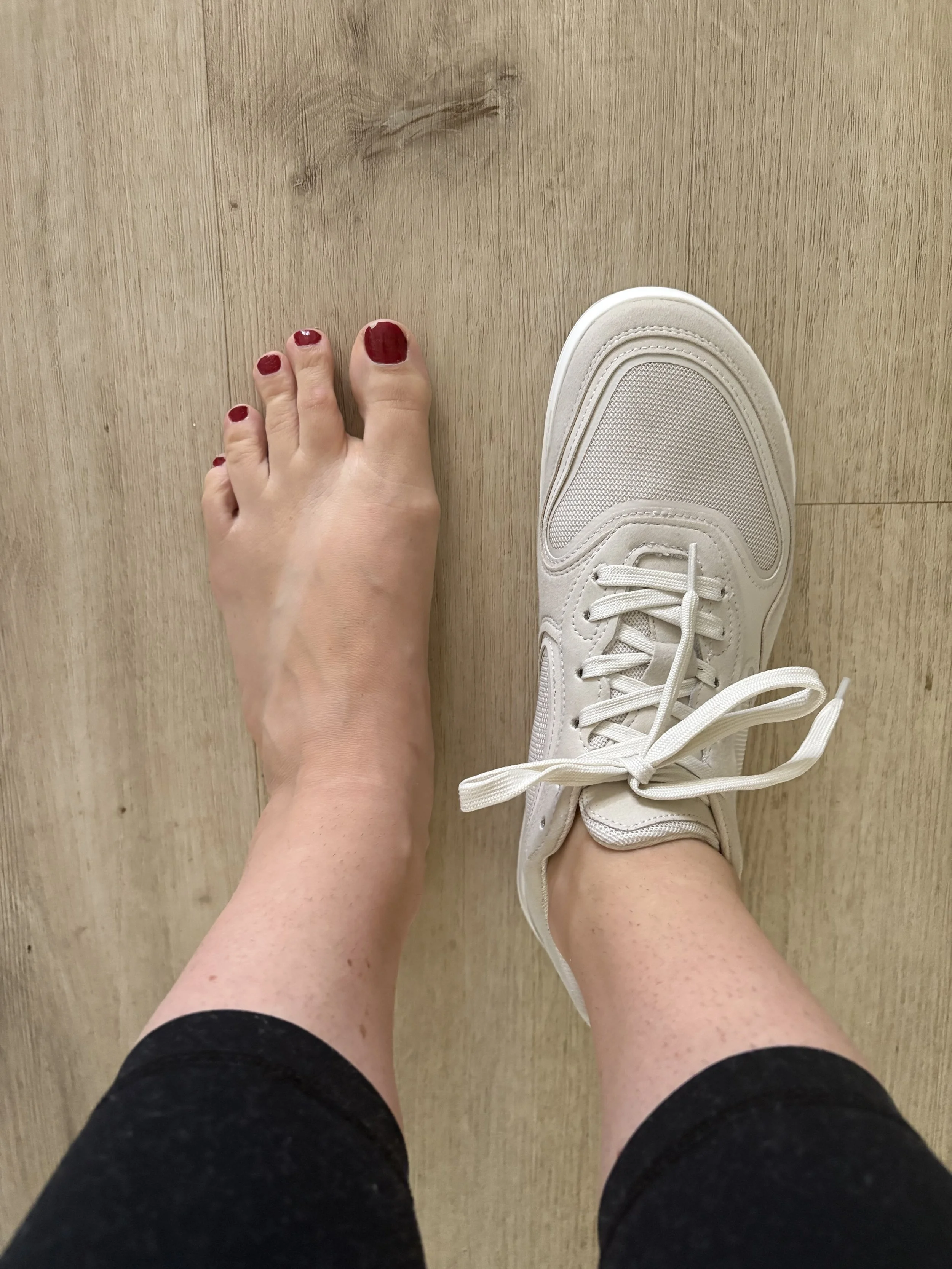
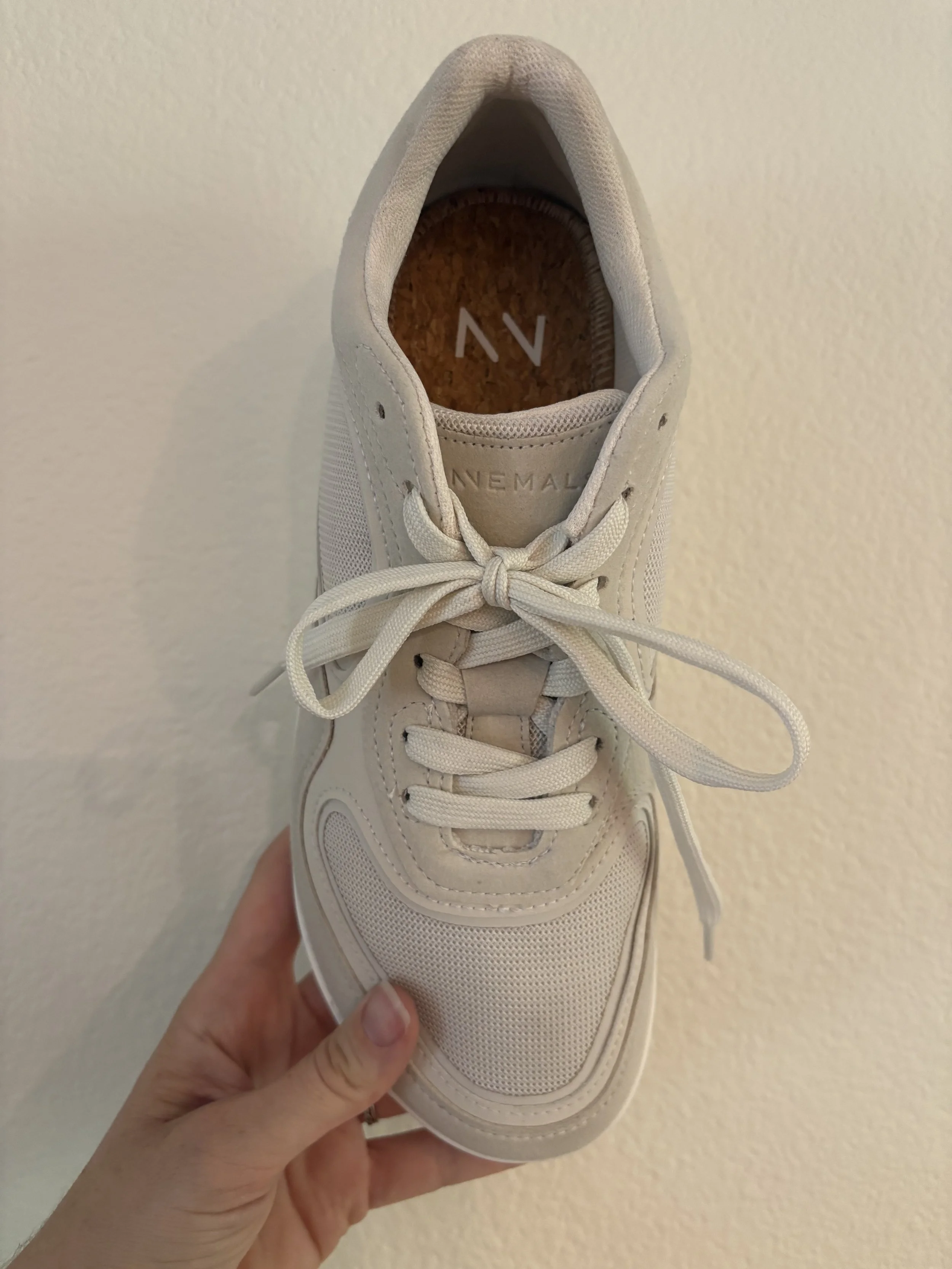
Trying Minnemals Barefoot Shoes
I’ve tried many different barefoot shoe brands in the last few years. I can thoroughly say that Minnemals is at the top of the list for a versatile, aesthetic sneaker!
If you want to read my full review, check it out here!
Kaelyn
latest on the blog…





Stop waiting for January to start working towards your health goals.