
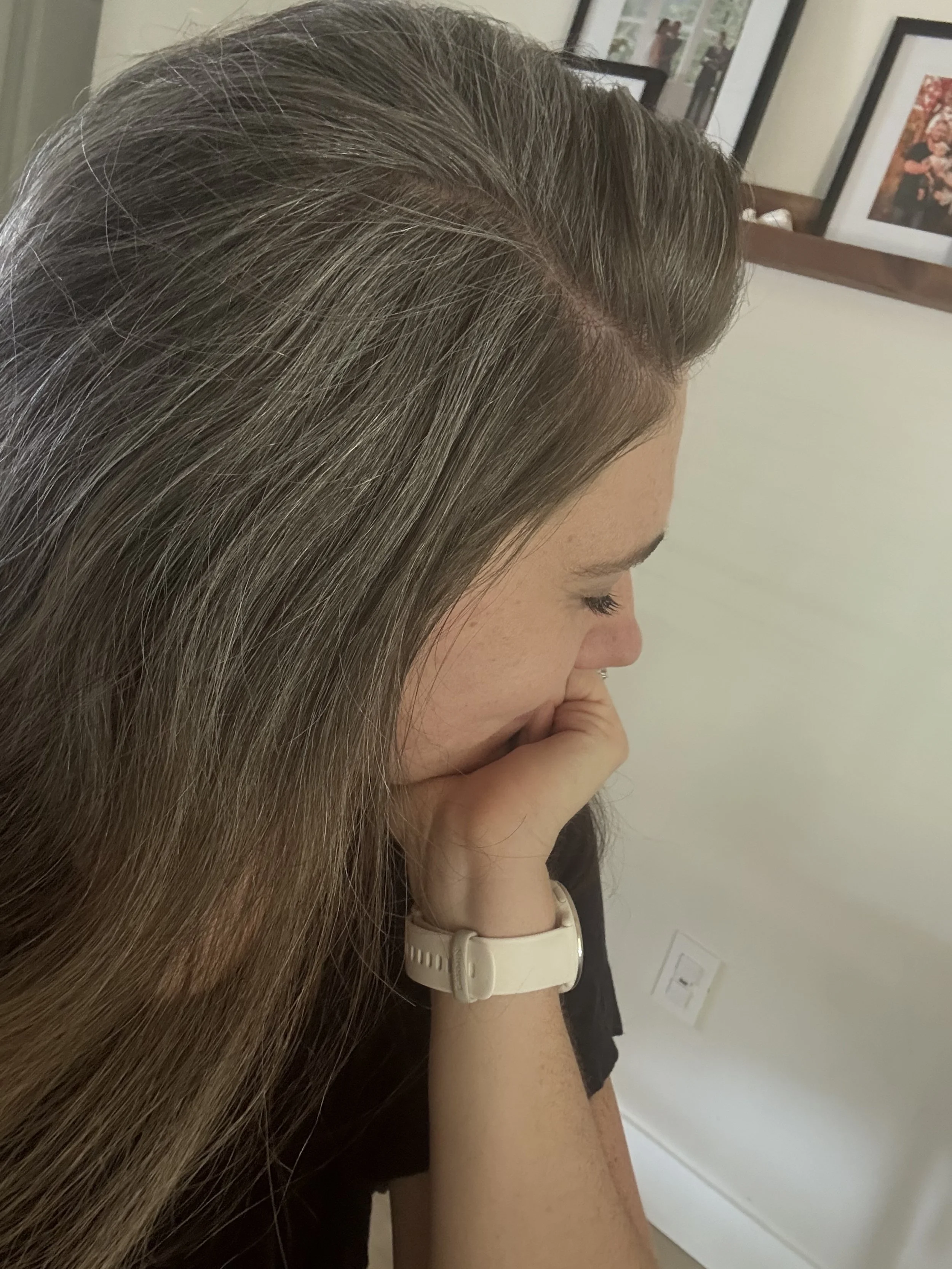
Are you starting a journey to embrace your gray hair?
While there are definitely no products you NEED, there are for sure some that make the process a bit easier. Here are some that I’ve loved!
If you're thinking about growing out your gray hair, or you're already somewhere in the middle of the process, there are a few things that can make the transition a whole lot easier.
I started going gray pretty young (like in my teen years!), and while I've come to genuinely love my natural hair, getting to this point has been a process. I've spent plenty of time figuring out how to work with my gray hair instead of constantly trying to cover it up.
And if you've been coloring your hair for years, you know that growing out your natural color isn't exactly an overnight process. There's the awkward line where your gray roots meet your previously colored hair, the temptation to book another color appointment, and sometimes a whole new hair texture to figure out.
But one of my favorite things about embracing my gray hair has been simplifying my beauty routine. I'm no longer trying to keep up with a color that requires constant maintenance, and I love that.
That said, I'm also not opposed to making the grow-out process a little easier. From a good moisturizing hair mask to a cute baseball cap for the days when your roots are driving you crazy, here are 10 products worth having on hand while transitioning to gray hair.
1. Root Touch-Up Spray
I know, I know. Isn't the whole point of going gray to stop covering it up?
Yes! But hear me out.
When you're transitioning from years of coloring your hair, there's often a pretty dramatic line between your natural gray roots and the rest of your hair. Depending on your starting color, it can be especially noticeable.
And while I fully support embracing the grow-out, I also don't think there's anything wrong with wanting to soften that contrast every once in a while. Maybe you have family pictures coming up, a wedding to attend, or you're just having one of those days when you're not loving how your hair looks.
A temporary root touch-up spray can help blend that line without committing to another round of permanent hair dye.
Most wash out with shampoo, so you're not actually setting back your gray hair transition.
I'd look for something that matches your previously colored hair and doesn't leave your roots feeling too sticky or stiff.
I used this one early on in my grow-out process. I enjoy that it has great coverage and fully washes out. That said, it will transfer a bit if you touch the hair you sprayed or go to sleep before washing it out.
2. A Silk Pillowcase
This is one of those purchases that has benefits well beyond growing out gray hair.
Silk pillowcases are especially nice if you're dealing with dry, frizzy, or fragile hair. The smooth fabric creates less friction than a traditional cotton pillowcase, which may help minimize tangling and breakage while you sleep.
Gray hair can be especially prone to breakage, so protecting those strands is important! Especially to help minimize breakage and frizz.
Personally, I looked for a 100% mulberry silk pillowcase rather than one that is polyester- or acrylic-based.
I have owned two of these pillowcases for years and cycle between them! They have held up great and are significantly more affordable than some other options available. I also appreciate that they are OEKO-TEX certified, and are available in several different color options to match our linen bedding.
3. Cute Headbands
Honestly, I think headbands are one of the easiest ways to get through the awkward stages of growing out gray hair. Especially the wider ones!
If you have a noticeable line between your natural roots and the rest of your hair, a wide headband can cover a good portion of it. And suddenly, instead of feeling like your hair is in an awkward in-between stage, it looks like you actually styled it that way.
I'm particularly drawn to simple, classic styles that don't feel too trendy.
I also love that this is such an easy option for busy mornings. Pull your hair back, throw on a headband, and you're done.
Here are some styles that I have really enjoyed:
these fabric headbands are comfortable and don’t slip throughout the day
I have very thick hair and plastic headbands often don’t hold my hair back. I found this style held my hair back through the day and didn’t slip much.
4. A Couple of Good Baseball Caps
Sometimes you just need to throw on a hat and call it a day. And if you're growing out gray hair, I think having a couple of baseball caps you genuinely love is a must.
Not because you need to hide your gray hair, but because there are inevitably going to be days when you don't feel like dealing with it. I love the look of a baseball cap with a low bun or ponytail, especially when I'm running errands or out walking.
Over the years, I have collected a few different options. But my absolute faves are simple, cotton baseball caps that are comfy and versatile. I have this one and this one that I particularly have enjoyed wearing.
And as a bonus, hats offer some protection from direct sun exposure, which is helpful for both your scalp and hair.
5. A Really Good Moisturizing Shampoo and Conditioner
One thing worth knowing about gray hair is that the texture can be different from the hair you're used to. Some women notice that their gray strands are coarser, drier, or a little more wiry. Others don't experience much of a difference at all.
And then there's the damage from years of coloring your hair.
If you've been highlighting, bleaching, or using permanent hair dye for a long time, your older hair may be more porous than your new growth. High-porosity hair tends to absorb water quickly but can also lose moisture easily. This can leave your hair feeling dry, frizzy, or difficult to manage.
If you're dealing with dryness, I'd start by taking a look at your shampoo and conditioner. You may find that the products you've been using for years aren't quite what your hair needs anymore.
I'd look for a moisturizing shampoo that cleanses without leaving your hair feeling stripped, along with a conditioner that helps soften and detangle.
Ingredients like glycerin, panthenol, shea butter, and argan oil can be helpful, depending on your hair type.
And don't feel like you have to purchase something specifically marketed for gray hair. A good moisturizing formula for dry or damaged hair may work just as well.
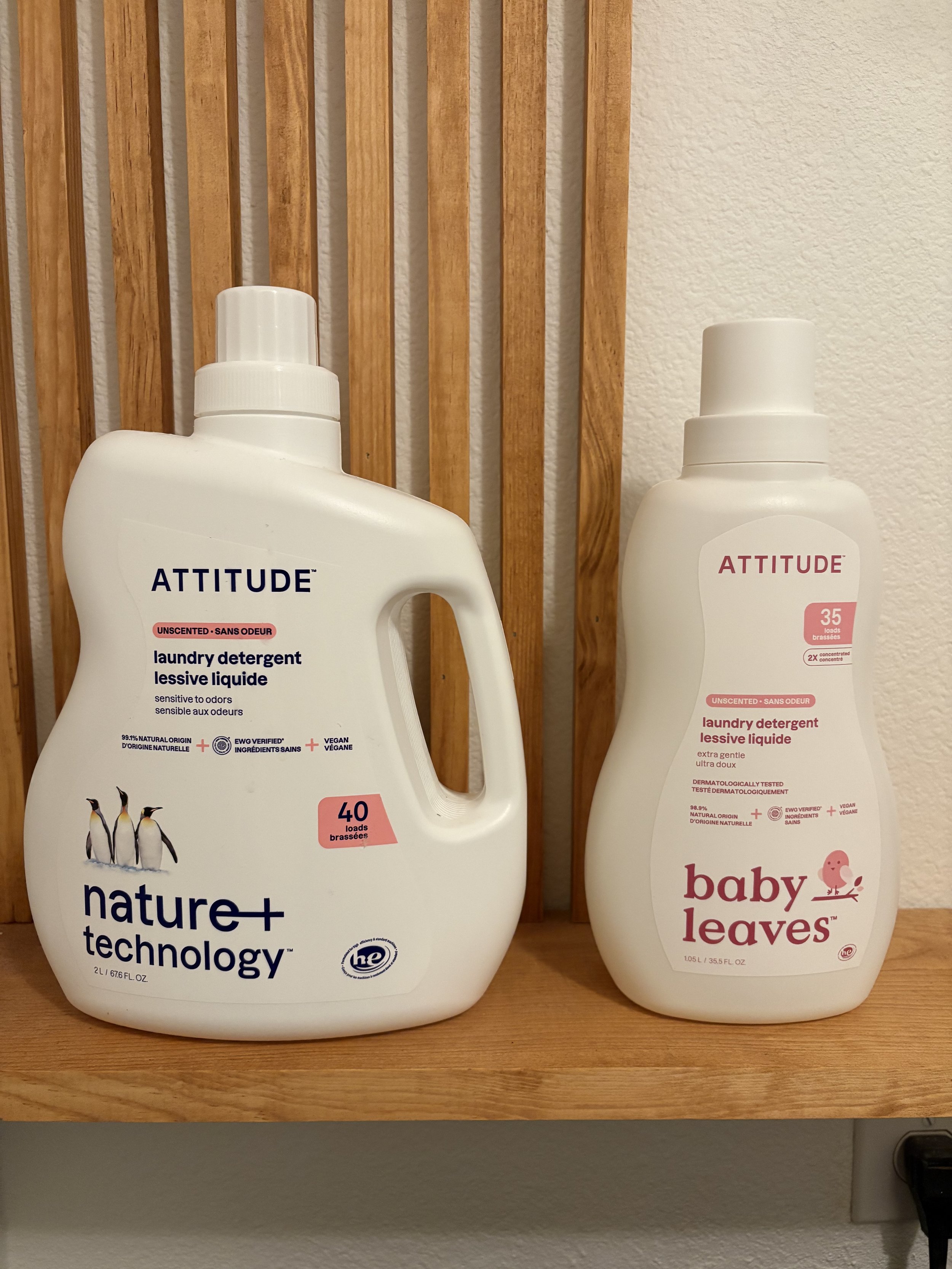
I’ve been enjoying Attitude Moisturizing shampoo and conditioner for years. I love that it is healthier than many conventional hair products, while also being far more affordable than many of the organic shampoos and conditioners on the market. I also appreciate that you can purchase a refill instead of another plastic bottle. I’ve been refilling the same plastic bottle for well over a year now and love the sustainability of it!
shop attitude shampoo + conditioner
6. A Deep Conditioning Hair Mask
If your hair has been through years of coloring, highlighting, and heat styling, a good hair mask might be one of the most worthwhile products on this list. Especially if you're trying to maintain your length while growing out your natural color.
Those older, previously colored ends have been through a lot. And while a hair mask can't undo damage or permanently repair split ends, it can make your hair feel significantly softer and easier to manage.
Personally, I wash my hair about once a week and deep condition every time. I have very thick hair, and still occasionally have a gray blending appointment, so feel that my hair benefits from the added moisture.
If you have fine hair, you might prefer a lighter mask that won't weigh your hair down. If your hair is thick or coarse, a richer formula may work better.
You also don't need to spend a fortune here.
There are plenty of affordable hair masks that can do a great job, and I'd rather find one that works well than pay extra for pretty packaging.
Again, I love Attitude for hair products that have nourishing ingredients, skip some of the yuckier ones, and are affordable.
7. Rosemary Oil for Scalp Care
I've become increasingly interested in scalp health as part of a more natural approach to hair care. After all, if I'm going to embrace my natural hair, I want to take good care of it!
Rosemary oil has gotten quite a bit of attention in recent years for its potential hair growth benefits. There is some early research suggesting that topical rosemary oil may be helpful for certain types of hair loss, although the evidence is still pretty limited.
And to be clear, there's no good evidence that rosemary oil can reverse gray hair or bring back your natural pigment.
But if you enjoy incorporating natural oils into your beauty routine, a properly diluted rosemary scalp oil might be something to consider. I would look for a pre-diluted formula made specifically for scalp use rather than applying pure essential oil directly to your skin.
Essential oils are highly concentrated and can cause irritation, especially if they're not diluted correctly.
If you're dealing with a sensitive scalp, patch testing is always a good idea. And if you're experiencing significant hair thinning or shedding, I'd recommend talking with a dermatologist rather than relying on essential oils alone.
This certainly isn't a necessary step in transitioning to gray hair, but it can be a nice addition if scalp care is something you're interested in.
Related Reads:
8. Purple Shampoo
Purple shampoo is probably one of the first products that comes to mind when you think about gray hair care. And while I don't think everyone needs it, it can be helpful if your silver or white strands start looking a little yellow.
Gray hair can sometimes develop warmer tones from things like product buildup, environmental exposure, and heat styling. Purple shampoo works by depositing a small amount of violet pigment onto the hair to help neutralize those yellow tones.
The result is hair that appears cooler and brighter.
But here's the thing: I wouldn't use purple shampoo every time you wash your hair unless your particular product recommends it and your hair tolerates it well. Some purple shampoos can be drying, and if you use too much, you may end up with a slight lavender tint on your lighter strands.
I'd start by using it occasionally and see how your hair responds.
And if your gray hair isn't looking yellow? You probably don't need it at all.
I used this one early on in my hair transition when I felt like I was struggling with a lot of yellowing. Fair warning— it is VERY pigmented and your hands will stain purple if you dont quickly rinse them off after applying.
9. A Lightweight Leave-In Conditioner or Hair Oil
If your gray hair tends to be dry or frizzy, a leave-in conditioner or lightweight hair oil can make a big difference in how it looks and feels. I especially like products that can be applied to damp hair after washing and then left alone.
Anything that makes my routine easier is a win.
A good leave-in conditioner can help with detangling, reduce friction, and make your hair feel softer. Hair oils and serums can also be helpful for smoothing flyaways and adding a little shine, especially to dry ends.
Argan oil, jojoba oil, and squalane are a few ingredients worth looking into.
Just be careful not to overdo it.
If you have fine hair, a few drops of oil may be plenty. Too much can leave your hair looking greasy instead of shiny.
And while I love the idea of using simple, natural products whenever possible, I also think it's worth remembering that the best product is the one that actually works for your hair. You don't need to force a particular ingredient or product into your routine simply because it's popular in the natural beauty space. As always, I’m an 80/20 girly when it comes to sustainable, healthy living.
10. A Microfiber Hair Towel
This last one isn't necessarily specific to gray hair, but it's a simple way to be a little gentler with your hair. Wet hair can be especially vulnerable to damage, particularly if it's already been weakened by chemical treatments.
And vigorously rubbing your hair with a regular bath towel isn't doing those fragile ends any favors. A microfiber hair towel can help absorb excess water without as much friction or pulling.
I also love how convenient they are. They're lightweight, easy to wrap around your hair, and don't fall off your head every time you bend over.
If you're trying to avoid purchasing another synthetic product, a soft cotton T-shirt is a perfectly good alternative. The important part is being gentle with your hair while it's wet.
While generally I try to prioritize natural fibers as much as possible (again, im all about the 80/20 lifestyle), I love how convenient these towels are and how gentle they are on fragile hair.
A Few Things I've Learned About Growing Out Gray Hair
I think one of the biggest mistakes you can make when transitioning to gray hair is feeling like you have to do everything perfectly.
You don't.
You don't have to throw away every product you've ever used, switch to an entirely new hair care routine, or suddenly become someone who never styles her hair.
And you definitely don't have to love the way your hair looks every single day.
There are going to be awkward stages. Depending on how long your hair is and how much of it has been colored, the process can take quite a while.
Hair grows about half an inch per month on average, so if you're hoping to grow out several inches of natural gray hair, patience is going to be part of the equation. You might decide to cut your hair shorter to speed things up. You might try gray blending to soften the grow-out line. Or you might decide to let it grow naturally without doing anything at all.
I don't think there's a right or wrong way to approach it.
For me, one of the best parts of embracing my gray hair has been realizing how much time, money, and mental energy I was spending trying to maintain a hair color that wasn't naturally mine. And while I still enjoy taking care of my hair and finding products that work well for it, I love that I'm no longer planning my life around my next color appointment.
Frequently Asked Questions About Growing Out Gray Hair
What is the easiest way to transition to gray hair?
It really depends on your starting hair color and how comfortable you are with the grow-out process.
If you don't mind having a noticeable line between your roots and colored hair, you can simply stop coloring it and let your natural hair grow. If you'd prefer a more gradual transition, gray blending with highlights or lowlights can help soften that contrast. That has made a huge difference for me personally.
You can also use temporary root products, headbands, or hats to get through the awkward stages.
How long does it take to grow out gray hair?
Hair grows about half an inch per month on average, although everyone's growth rate is a little different. If you have short hair, you may be able to grow out your natural color relatively quickly.
If you have long hair and don't want to cut off your previously colored ends, the process can take a few years.
Does gray hair need special shampoo?
Not necessarily.
Some women find that their gray hair is drier or coarser than their previously pigmented hair, but that's not true for everyone.
I'd focus on choosing a shampoo and conditioner based on your hair's texture and condition rather than simply buying something because it's labeled for gray hair.
How do I keep gray hair from looking yellow?
Purple shampoo can help neutralize unwanted yellow tones in gray or white hair. If your hair leans more towards orange tones, you may need a blue shampoo. It's also worth being mindful of excessive heat styling and product buildup, which can contribute to discoloration.
If you don't have any noticeable yellowing, there's no reason you need to add purple shampoo to your routine.
What helps soften coarse gray hair?
A moisturizing conditioner, occasional deep conditioning mask, and lightweight leave-in product can all help improve softness and manageability.
I'd also recommend being gentle when brushing and detangling, especially if you're growing out previously damaged hair.
Final Thoughts
If you're somewhere in the middle of growing out your gray hair, I hope this gives you a few ideas for making the process a little easier. You certainly don't need all 10 of these products. In fact, I'd encourage you to start with what you already have and only add things that solve a problem you're actually dealing with.
Maybe that's a moisturizing hair mask for dry ends, a cute headband to get you through an awkward stage, or a root spray for the occasional day when you want a little extra coverage.
Whatever works for you.
I've come to really appreciate my natural gray hair, and I'm glad I made the decision to stop fighting it.
If you're still on the fence about making the transition, I've written quite a bit more about my experience:
Related reading:
My Gray Blending Experience: How I Am Easing the Gray Hair Grow Out
9-Month Gray Hair Grow Out Update: What I am Loving and What’s Been Hard
And if you're already growing out your gray hair, I'd love to hear how it's going. What's been the hardest part of the transition for you?





While there aren’t any products you NEED while growing out your natural gray hair, there are some that make the process a bit easier..