

Breastmilk storage can be overwhelming and kind of confusing..Let alone trying to do it while still being mindful of toxins and reducing waste.
This post dives into all the nitty gritty of non-toxic and eco-friendly breast milk storing options!
After breastfeeding both of my babies for over 20 months each, I've tried quite a few different ways to store breast milk. From pumping during 12-hour nursing shifts at the hospital to building a small freezer stash at home, I've learned that there really isn't one perfect breast milk storage system.
With my first baby, I used disposable plastic breast milk storage bags almost exclusively. I was a new mom, working outside the home, and just trying to figure out how to juggle breastfeeding, pumping, and everything else that comes with having a newborn.
By the time my second baby came along, I wanted to be a little more intentional about reducing our plastic use, particularly when it came to food storage. I started experimenting with reusable silicone breast milk storage bags, glass jars, and other alternatives.
And while I found some options that I really loved, I also learned that convenience matters. A LOT.
When I had an oversupply with my daughter and was pumping frequently, I still reached for disposable breast milk storage bags occasionally. They're affordable, take up very little freezer space, and are incredibly convenient when you're storing larger quantities of milk.
I share that because I don't think creating a healthier home needs to be an all-or-nothing endeavor. There are some wonderful reusable alternatives available, but traditional breast milk storage bags designed for that purpose can also be a perfectly reasonable choice.
Below, I'm sharing the best non-toxic breast milk storage bags and containers I've found, including several that I've personally used throughout my breastfeeding journeys.
My Favorite Non-Toxic Breast Milk Storage Bags & Containers
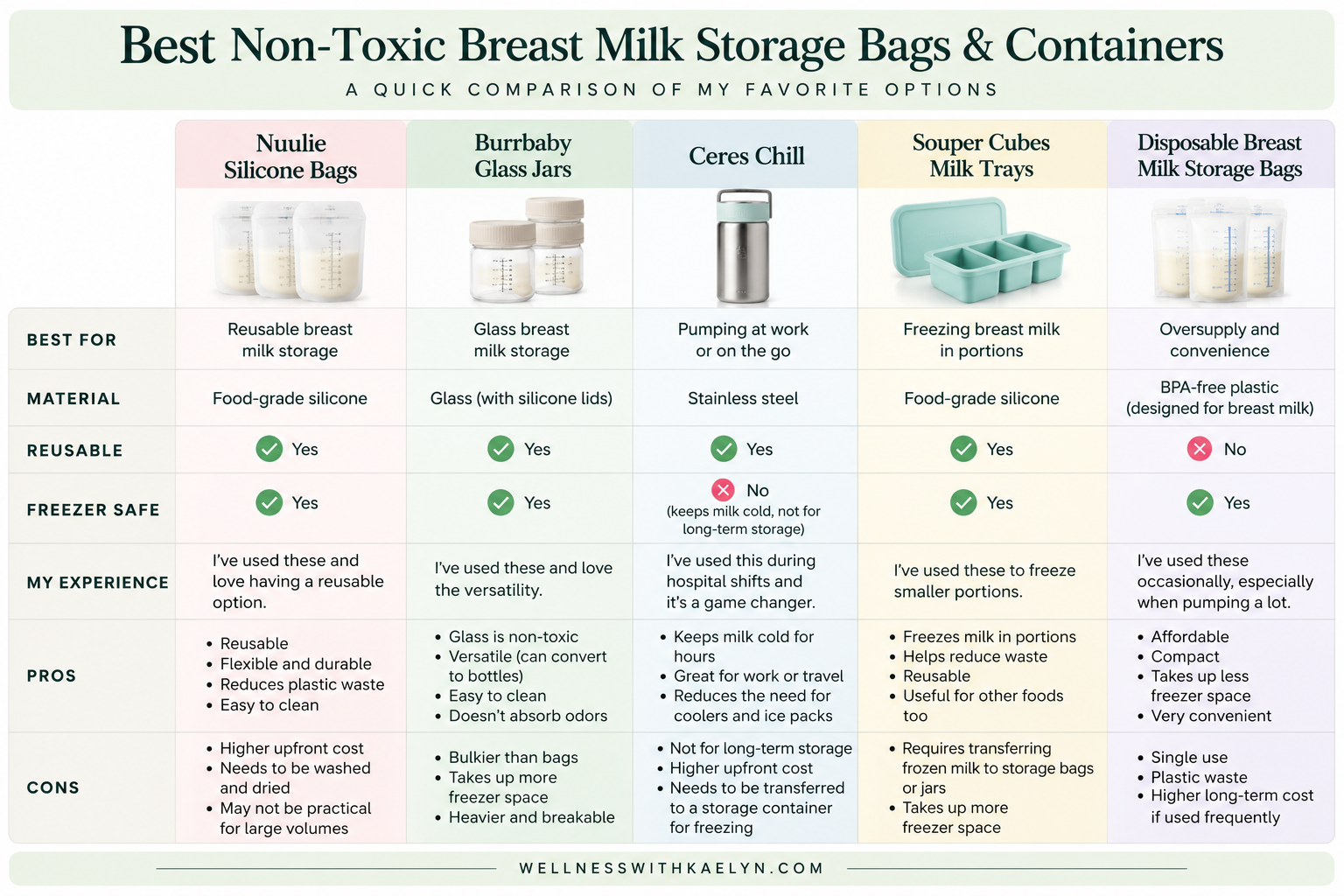
1. Nuulie Silicone Breast Milk Storage Bags — Best Reusable Option
If you're hoping to reduce the number of disposable breast milk storage bags you go through, reusable silicone bags are a great place to start. I've personally used the Nuulie silicone breast milk storage bags, and I appreciate having an option that I can wash and use again rather than throwing away after a single use.
Silicone is a popular alternative to traditional plastic storage bags because it's flexible, durable, and reusable. When shopping for silicone breast milk storage bags, I recommend looking for food-grade materials, a secure closure, and a design that's easy to clean thoroughly.
One thing to consider before investing in reusable bags is how much milk you typically store. If you're exclusively pumping or building a substantial freezer stash, purchasing enough silicone bags can become expensive. They also require washing and drying between uses.
But if you're primarily breastfeeding and only need to store a few bottles' worth of milk at a time, reusable bags can be a really practical investment.
For my second, I never pumped a lot of volume since I was not working out of the house as much. We had a couple of sets of silicone bags and cycled through them, and it worked great.
2. Burrbaby Glass Breast Milk Storage Jars — Best Glass Option
Glass is one of my favorite materials for food storage, so naturally, I wanted to explore glass breast milk storage containers as well. I've used the Burrbaby glass storage jars, which are designed specifically for storing breast milk and can also be converted into baby bottles with compatible attachments.
I love the versatility of a system like this. Rather than transferring milk between multiple containers, you can use the same jars throughout different stages of feeding.
Glass is also easy to clean, doesn't absorb odors, and eliminates direct contact between breast milk and plastic storage bags.
Of course, there are some drawbacks.
Glass containers are bulkier than breast milk storage bags, and they take up considerably more freezer space. They're also heavier and breakable, which might make them less convenient for traveling or transporting milk to daycare. For smaller quantities of milk, though, I think they're a wonderful option.
I also appreciate that Burrbaby allows you to select the exact bundle that your family needs, including how many containers, nipples, and lids you need.
Burrbaby generously shared a code for WWK readers- you can save 5% on your orders with code KAELYN5 🎉

3. Ceres Chill — Best for Pumping at Work
Of all the breast milk storage products I've used, Ceres Chill is one I especially appreciate for working moms.
As a nurse, I've had to figure out how to pump during busy hospital shifts, and storing expressed milk throughout the workday can be surprisingly inconvenient.
Traditionally, that meant bringing along a cooler, ice packs, storage bags, and all the other supplies that seem to accumulate when you're pumping away from home. Ceres Chill minimized all of that stuff.
It's an insulated breast milk storage system that keeps milk cold while you're away from home.
I've personally used mine while working at the hospital, and I love that it simplifies the process of collecting and transporting milk.
It's important to remember that Ceres Chill is primarily a chilling and transportation solution rather than a replacement for long-term freezer storage. You'll still need to transfer your milk into appropriate containers when you're ready to refrigerate or freeze it. But for moms who pump at work, travel frequently, or spend long stretches away from their babies, I think it's an option worth considering.

believe it or not— I am pumping in this picture.
While breastfeeding both kids, I used a hands-free pump at work and the Ceres chiller. Then I would transfer the milk into storage containers once I got home.
4. Souper Cubes Milk Trays — Best for Freezing Small Portions
Another option I've personally used is Souper Cubes silicone trays.
While they're not traditional breast milk storage bags, silicone freezer trays can be a convenient way to freeze milk in smaller portions.
I particularly like the idea of having pre-portioned milk available rather than thawing a larger container when you only need a small amount.
Just make sure the tray is appropriate for food storage and that you're following safe breast milk handling practices. Once frozen, milk portions should be transferred hygienically into an appropriate, labeled freezer-storage container.
One additional benefit is that silicone freezer trays can continue to be useful long after your breastfeeding journey is over.
I love investing in kitchen products that serve more than one purpose, and these certainly fit that category.
5. Disposable Breast Milk Storage Bags — Best for Oversupply and Convenience
I know, I know. Disposable plastic bags in an article about non-toxic breast milk storage?
But hear me out.
When I had an oversupply with my daughter, I was pumping a LOT of milk.
And while I love reusable storage options, sometimes traditional breast milk storage bags are simply the most practical choice. They're affordable, compact, and can be frozen flat to maximize freezer space.
I think it's important to remember that breast milk storage bags specifically designed for storing human milk are an accepted option for safely storing expressed milk. If you prefer to minimize plastic use, you can absolutely incorporate reusable alternatives. But I wouldn't stress about occasionally using disposable storage bags when they're the best fit for your family's needs.
Breastfeeding and pumping are already a tremendous amount of work. Your storage system should make your life easier, not more complicated.
If standard breast milk storage containers work for you and your family, keep at it! (I shared in my postpartum freezer meal prep post about how we used Ziploc bags for many of our freezer meals simply out of convenience). In different seasons, you have different priorities or options, and that is okay!
How to Safely Store Breast Milk
Whether you're using glass jars, reusable silicone bags, or traditional breast milk storage bags, knowing how to properly store expressed milk is important.
And if you're anything like me, you'll probably find yourself double-checking the storage guidelines more than once!
Fortunately, the CDC has some straightforward recommendations for storing freshly expressed breast milk.
How Long Can Breast Milk Be Stored?
The following recommendations apply to healthy, full-term infants.
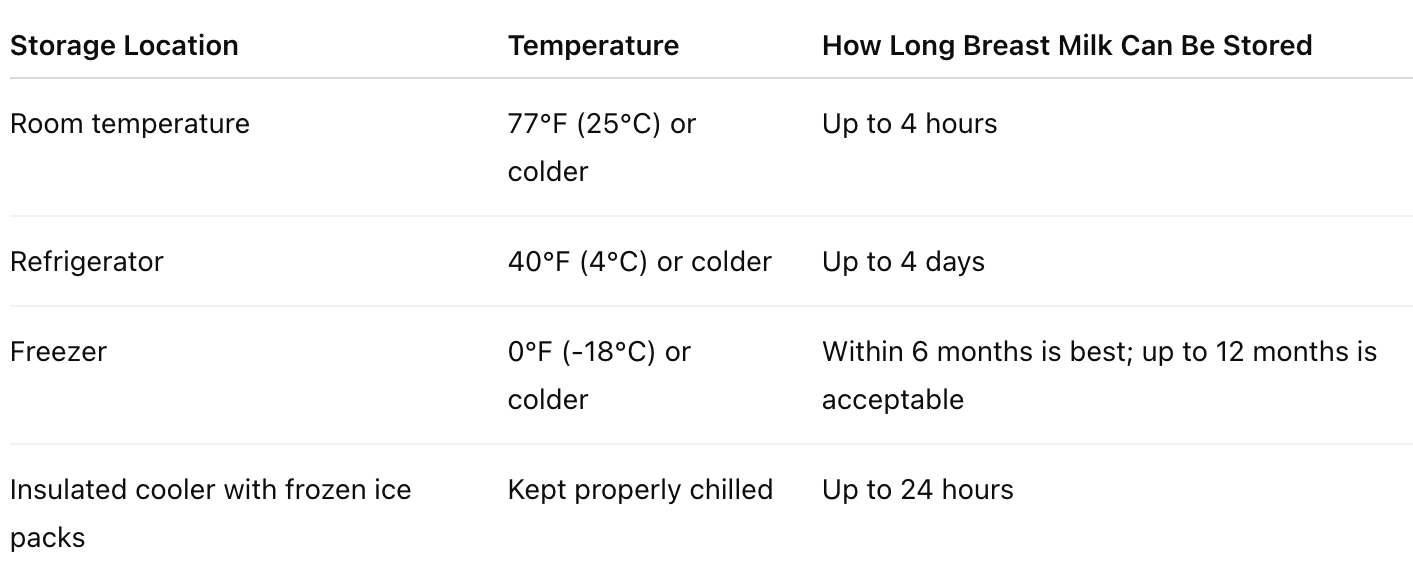
These guidelines are for freshly expressed breast milk. Previously frozen milk has different storage recommendations, which I'll cover below.
If your baby was born prematurely or has certain medical conditions, your healthcare team may recommend different storage practices.
My Tips for Storing Breast Milk
After spending quite a bit of time pumping and storing breast milk over the years, I've learned a few things that make the process easier.
Freeze milk in smaller portions.
There's nothing quite as frustrating as thawing a large container of breast milk only to have your baby drink an ounce or two! The CDC recommends freezing breast milk in portions of approximately 2–4 ounces, or whatever amount your baby typically drinks during a feeding.
I found smaller portions particularly helpful when I wasn't sure how much milk my baby would need. Especially since I personally never bottle-fed my babies— it was always my husband or mom who watched our kids while I worked. I honestly had no idea the volume they ate 😅
Always label your milk.
I recommend labeling every container with the date the milk was expressed. This is especially important if you're building a freezer stash and regularly adding new milk. If you're sending milk to daycare, you may also need to include your child's name.
Store milk toward the back of the refrigerator or freezer.
Temperature fluctuations can affect milk storage, so avoid keeping breast milk in the refrigerator or freezer door.
The back of the refrigerator or freezer generally maintains a more consistent temperature.
Leave room for expansion when freezing.
Breast milk expands as it freezes, so avoid filling containers completely. The CDC recommends leaving approximately one inch of space at the top of the container.
This is particularly important when using glass jars, which can crack if they're overfilled. Always confirm that your containers are specifically designed for freezer use.
Cool freshly expressed milk before combining it with refrigerated milk.
If you're pumping multiple times throughout the day, you may want to combine your milk into one storage container.
The CDC recommends cooling freshly expressed milk before combining it with milk that's already refrigerated or frozen. Adding warm milk directly can raise the temperature of the previously stored milk.
When combining milk expressed at different times, use the date of the oldest milk to determine how long the combined milk can be stored.
How to Safely Thaw Frozen Breast Milk
If you've spent weeks or months building a freezer stash, the last thing you want is to waste it! The safest way to thaw frozen breast milk is to transfer it to the refrigerator and allow it to thaw gradually.
You can also thaw breast milk by placing the sealed container in lukewarm water or holding it under lukewarm running water. Avoid using hot water, placing milk directly on the stove, or microwaving breast milk. Microwaves can heat milk unevenly, creating hot spots that could burn your baby's mouth.
According to the CDC, previously frozen breast milk should be used within 24 hours after it has completely thawed in the refrigerator. Once thawed breast milk has been warmed or brought to room temperature, it should be used within two hours.
And remember, once breast milk has completely thawed, it should not be refrozen.
Can You Reheat Breast Milk?
Yes, breast milk can be gently warmed before feeding, although it doesn't actually need to be warmed at all. Some babies are perfectly happy drinking cold breast milk straight from the refrigerator!
If your baby prefers warm milk, place the sealed container in a bowl of warm water or hold it under warm running water. Before feeding, test a few drops on your wrist to make sure the milk isn't too hot.
You may also notice that refrigerated breast milk separates into layers, with the fat rising to the top. This is completely normal. Gently swirl the container to mix the milk back together.
If your baby doesn't finish a bottle, the CDC recommends using the leftover milk within two hours after the feeding ends. After that, discard any remaining milk.
A Final Note on Breast Milk Storage
I know firsthand how much time and effort can go into pumping breast milk, especially when you're trying to balance breastfeeding with work and caring for other children. Having a reliable storage system makes a difference.
But whether you're using reusable silicone bags, glass jars, or traditional disposable breast milk storage bags, the most important thing is that your milk is handled and stored safely.
You don't need an expensive collection of breastfeeding accessories to do that. Choose products that fit your needs, keep your pumping equipment clean, and follow evidence-based storage recommendations.
And give yourself some credit for all the work that goes into feeding your baby!
Related Reads:
Latest on the blog…








After trying dozens of underwear brands, here are the tried-and-true options for comfort, healthy fabrics, and affordability.