
7 Best Organic Sunscreens for Kids (2026): Safe, Mineral-Based Sun Protection for Sensitive Skin
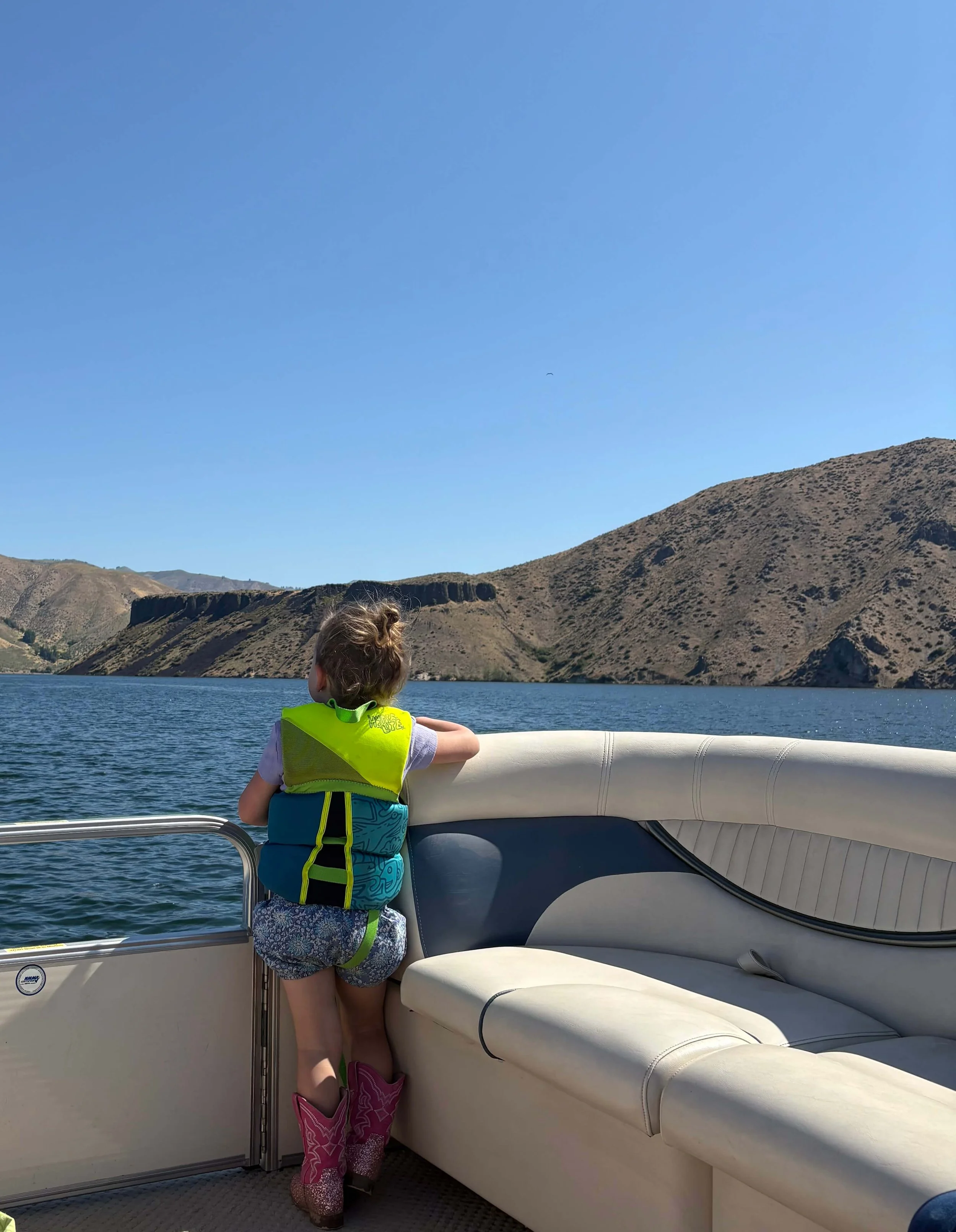
While sunscreen has become somewhat of a taboo in the wellness space in recent years, we are big fans. Especially when there are healthier alternatives to support our holistic health, skin integrity, and the environment.
Here are some of my fave, kid-friendly sunscreens for all your summer adventures!
If there is one thing about summertime in my family, it’s that we will be outside as much as possible. Whether that’s me spending time in the garden, us going on walks, or camping and long days spent on the boat fishing, we soak up all the sun we can. And, despite it becoming a rather controversial subject over the last few years, we choose to use a high-quality, natural sunscreen to protect our skin. Especially, my little ones. As a mom, registered nurse, and holistic health coach, sunscreen is one of those products that I never want to choose blindly.
Walk down the sunscreen aisle, and you'll find dozens of options claiming to be the safest, cleanest, and most effective choice for your child's skin. Unfortunately, not all sunscreen options are created equal.
Some products contain chemical UV filters, synthetic ingredients, artificial fragrances, and preservatives that may increase the risk of skin irritation or allergic reactions—especially in children with sensitive skin.
That's why, whenever possible, I reach for a mineral sunscreen made with safe ingredients and broad-spectrum protection.
In this guide, I'm sharing my favorite healthier sunscreen options for babies, toddlers, big kids, and the whole family, along with what to look for when choosing the right sunscreen.
Why Sun Protection Matters
Sun exposure is a normal and healthy part of life. However, excessive exposure to the sun's harmful rays can increase the risk of:
Sunburn
Skin irritation
Premature aging
DNA damage
Skin cancer later in life
That's why sun safety should be a top priority during outdoor activities, whether you're heading to the beach, pool, hiking trail, or soccer field.
According to the American Academy of Pediatrics, sunscreen is only one piece of the puzzle.
For the best protection, you should have multiple layers of safe sun practices built into your life. These include things like protective clothing, hats, sunglasses, umbrellas, and shade, especially during peak UV hours.
Personally, we use a combination of all of the above. Day to day, we play outside in the backyard, where we have plenty of shade and sun. We typically come inside during peak UV times for my kids to cool off, nap, and rest a bit. But on days when we are outside for extended periods of time, or especially when we are by the water, I’m pretty strict about making sure we have plenty of sunscreen options on hand.
Mineral vs. Chemical Sunscreens
When you are shopping for sunscreen, there are two primary types: mineral and chemical sunscreens. Here is a brief breakdown on what sets them apart and which I personally choose to use for my kids.
Mineral Sunscreen
Uses zinc oxide and titanium dioxide to create a physical barrier.
Pros:
Broad-spectrum protection
Less likely to cause irritation
Effective immediately after application
Preferred for sensitive skin
Cons':
because you are creating a physical barrier on the skin, they often leave a white cast
Chemical Sunscreens
Alternatively, chemical sunscreens use chemical UV filters that absorb UV radiation. While these can offer protection against the sun, they also can come with potentially harmful side-effects when exposed to the ingredients
Pros:
Lightweight texture
Less visible white cast
Easier cosmetic appearance
Cons:
More likely to irritate sensitive skin
May contain ingredients some families prefer to avoid
For children's skin, mineral-based products are consistently recommended by pediatricians and dermatologists.
But What About “Broad Spectrum”?
Broad-spectrum is considered the gold standard for sunscreens. This means that the sunscreen is protecting against both UVA and UVB rays. Both mineral and chemical sunscreens can block both of these rays. But it’s best practice to always make sure the bottle says “broad spectrum”!
Are Mineral Sunscreens Better for the Environment?
Many families choose mineral sunscreen because certain chemical UV filters have raised concerns regarding coral reefs and marine life.
While no sunscreen is completely impact-free, non-nano zinc oxide formulas are generally considered among the more environmentally conscious options available.
Why Mineral Sunscreen Is My First Choice for Kids
Children's skin is thinner and more delicate than adult skin, making it more vulnerable to irritation from certain ingredients.
Unlike chemical sunscreens, which absorb UV radiation and convert it into heat, mineral-based sunscreens create a physical barrier on the surface of the skin. This barrier helps reflect both UVA rays and UVB rays before they can contribute to sun damage.
The two most common active ingredients found in mineral-based products are:
Non-nano zinc oxide
Titanium dioxide
These ingredients provide broad-spectrum UVA and UVB protection without relying on chemical UV filters.
Many parents also prefer mineral sunscreen because it is often less likely to trigger allergic reactions on sensitive skin. Since my kids are prone to the occasional flare up of eczema and have overall sensitive skin, we always try to keep any topical products as mild and gentle as possible.
What I Look for in a Kids’ Sunscreen
When selecting a kids’ sunscreen, I look for several key factors:
1. Mineral Active Ingredients
My preference is always non-nano zinc oxide or titanium dioxide for broad-spectrum SPF protection.
2. Water Resistance
Whether you’re splashing in the pool or running through sprinklers, water-resistant sunscreens help maintain protection during active play.
3. Clean Ingredients
I prefer formulas that prioritize natural ingredients and plant-based ingredients while avoiding unnecessary fillers.
4. Fragrance-Free or Low Fragrance
I’m pretty much a no-fragrance person in general, but will occasionally use a product fragranced with essential oils. That said, I usually avoid EO’s with kidos. Essential oils can occasionally trigger skin irritation in some children, especially babies with delicate skin. Since my kids can be prone to eczema flares, we prefer gentler formulations.
5. Easy Application
Let's be honest: if a sunscreen is difficult to apply, it's unlikely to get used consistently. Convenient stick form products and easy-to-spread lotions are often the best choice.
The Best Organic Sunscreens for Kids
Curious about the sunscreens we actually use and love— here you go! These are all products we have personally purchased and are familiar with from our time as parents!
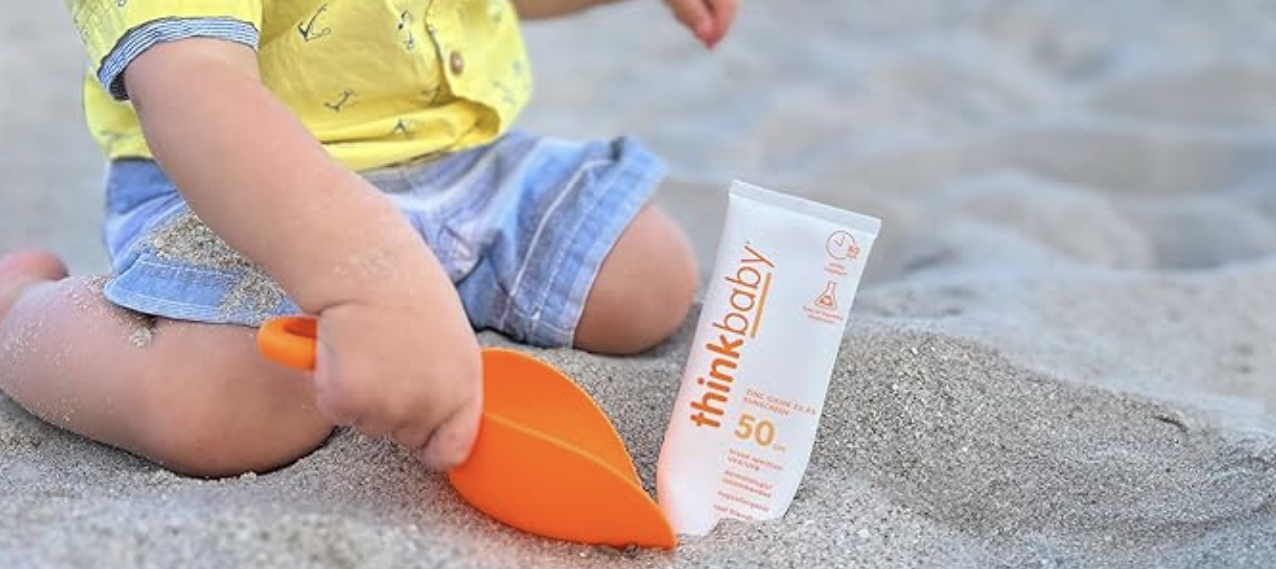
1. ThinkKids Safe Sunscreen SPF 50+
If you're looking for a reliable, widely available mineral-based sunscreen, ThinkKids Kid's Safe Sunscreen is one of my favorites.
Why I love it:
Broad-spectrum SPF 50
Non-nano zinc oxide
Water resistant for up to 80 minutes
No oxybenzone or chemical UV filters
Affordable compared to many premium brands
This is often my recommendation for families wanting a perfect chemical-free solution that balances effectiveness and value. We have tried both their sunscreen and sun stick options! I’m generally not a fan of aerosols or spray sunscreens, but they also have that option available for families wanting a spray.
2. Primally Pure Sun Care Line
I have used Primally Pure for years and years, and always keep their products in stock. While they are on the pricier side, I love their commitment to clean products that actually work. The sun care line is no exception. They are one of the only brands that prioritize tallow for their suncream base, which is also something I appreciate.
For kiddos, I would recommend choosing any of their unscented sun products. Here are our faves:
You can always use code Kaelyn10 on any of your Primally Pure purchases to save 10% ✨
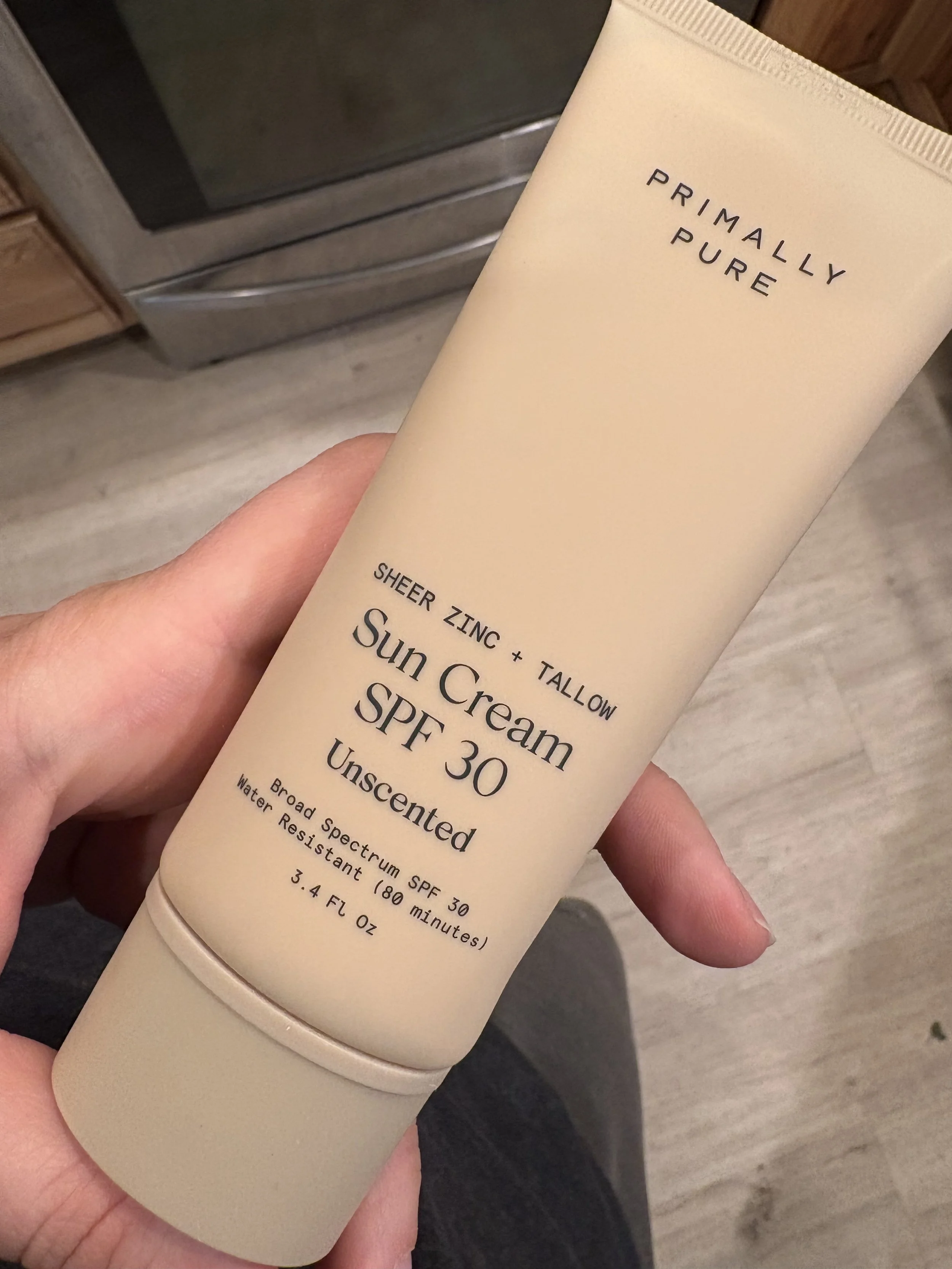
While sunscreen products are great, they also just have the best packaging. Not only is it aesthetically pleasing, but I love the functional twist top. No lost caps or slippery fingers while applying!
3. Babo Botanicals Sensitive Baby Mineral Sunscreen
Babo Botanicals consistently ranks among the best sunscreens for babies and young children.
Highlights:
Organic ingredients
Broad-spectrum protection
Hypoallergenic sunscreen formula
Aloe vera and plant-based ingredients
Suitable for sensitive skin
The formula spreads more easily than many mineral sunscreens and leaves less white cast behind.
4. Badger Kids Mineral Sunscreen Cream
Badger is one of the pioneers of natural sunscreen products. Fun fact: badger sunscreen was the first sun product I ever put on my baby’s skin back when I was a new mom. Since then, we have always had a couple of tubes floating around.
Their formula contains:
Organic sunflower seed oil
Organic beeswax
Organic ingredients
Non-nano zinc oxide
I appreciate their commitment to clean ingredients and environmentally conscious manufacturing. I will say that this sunscreen tends to be a bit on the greasy side. While it makes application easier, it not my favorite to use on myself.
5. Blue Lizard Sensitive Mineral Sunscreen
One of the highest-rated drugstore brand sunscreens, Blue Lizard is widely available and performs exceptionally well.
Benefits include:
High SPF
Broad-spectrum UVA protection
Water resistance
Suitable for daily use
It's an excellent drugstore find for families needing dependable protection that’s easily accessible.
6. Sunly by Attitude Mineral Sunscreen
Attitude is one of the only brands I have had a recurrent subscription of for years. While I originally started using their shampoos, I’ve recently become familiar with their cleaning products and sunscreen options, too. I love that all their product lines are focused on healthier ingredients, and affordability 👏
Features include:
Broad-spectrum protection
Non-nano zinc oxide
Vegan formulation
Lightweight feel
It's a great option for families already using Attitude products.
Ingredients I Prefer to Avoid
When evaluating sunscreen products, I personally try to avoid:
Oxybenzone- theAAP advises to avoid this ingredient in children’s sunscreen if possible, due to possible endocrine effects
Octinoxate-
Chemical UV filters
Artificial fragrance
Unnecessary synthetic ingredients
Some parents also choose to avoid ingredients such as retinyl palmitate, although research on its safety in sunscreen formulations remains mixed.
While the above ingredients are things I generally try to avoid in our products, I didn’t just pick them willy-nilly. The above ingredients align with the current AAP recommendations for ingredients to avoid, if possible, when choosing a sunscreen product.
How Much Sunscreen Should Kids Use?
One of the biggest mistakes parents make is not applying enough sunscreen. I went to some of the top dermatologists for their recommendations to gather them all up in one place…
As a general rule:
Apply generously 15 minutes before outdoor activities
Reapply every two hours
Reapply after swimming or heavy sweating
Use additional sunscreen after towel drying
Don’t forget your scalp and head, especially if you have light hair, limited hair, or a part!
Even the highest SPF values won't provide adequate protection if the product is under-applied.
And remember, sunscreen is only a part of the puzzle, and you really should be using multiple safe sun practices to protect your skin. But also— I think it’s important to have a healthy balance. The sun is biologically great for you.. but too much of a good thing isn’t always better.
Final Thoughts on the Best Organic Sunscreens for Kids
Finding the best organic sunscreens doesn't have to be complicated.
For most families, I recommend starting with ThinkKids Kid's Safe Sunscreen, Babo Botanicals, or California Baby Super Sensitive Sunscreen. These formulas combine broad-spectrum SPF protection, water resistance, and clean ingredients while remaining gentle on a child's skin.
Most importantly, remember that sunscreen is only one part of a complete sun safety plan. Pair your favorite mineral sunscreen with protective clothing, SPF clothing, shade, and common-sense sun habits to help protect your kids from harmful UV rays all summer long.
What are some of your favorite summer plans?!
Related Reads:
latest on the blog…





11 simple strategies to cutting back your screen time (and why it may be a good idea)